Buy business-center.eu ?
We are moving the project
business-center.eu .
Are you interested in purchasing the domain
business-center.eu ?
domain@kv-gmbh.de · 0541-91531010
Buy business-center.eu ?
Can you explain virtue ethics, duty ethics, and goods ethics?
Virtue ethics focuses on the character of the individual and emphasizes the development of virtuous traits such as honesty, courage, and compassion. It is concerned with cultivating moral excellence and living a good life. Duty ethics, also known as deontological ethics, is based on the idea that certain actions are inherently right or wrong, regardless of their consequences. It emphasizes the importance of following moral rules and fulfilling one's duties and obligations. Goods ethics, or consequentialism, evaluates the morality of an action based on its outcomes or consequences. It focuses on maximizing the overall good or happiness and considers the potential impact of an action on others. **
Is Buddhist ethics comparable to Christian ethics?
Buddhist ethics and Christian ethics share some similarities, such as the emphasis on compassion, love, and non-violence. Both traditions also promote the idea of treating others with kindness and respect. However, there are also significant differences between the two, such as the concept of sin and salvation in Christianity, which is not present in Buddhism. Additionally, the role of divine authority and the concept of God differs between the two traditions. Overall, while there are some common ethical principles, the underlying beliefs and foundations of Buddhist and Christian ethics are distinct. **


Similar search terms for Ethics
Top-Angebote
Products related to Ethics:
-
Pan Make Brilliant Work: Lessons on Creativity, Innovation and Success by Rod Judkins - Paperback - Self-Help/Business Creativity Guide, Author ofMake Brilliant Work is an inspiring guide by Rod Judkins, drawing on the real-life stories of visionaries from Frida Kahlo to Steve Jobs. This paperback book reveals the methods and mindsets that turn ordinary effort into extraordinary results. Judkins proves that talent alone never guaranteed success — persistence, risk-taking and original thinking did. A motivating read for anyone wanting to unlock their creative potential at work or in life. The book profiles figures who failed at school, were told they lacked talent, or were fired more than once, yet went on to achieve great things. Written by Rod Judkins, published by Pan Macmillan, this book is a reassuring truth: you don't have to be naturally brilliant to produce brilliant work.2,99 £*Shipping: 2,99 £Secure redirect to the provider
-
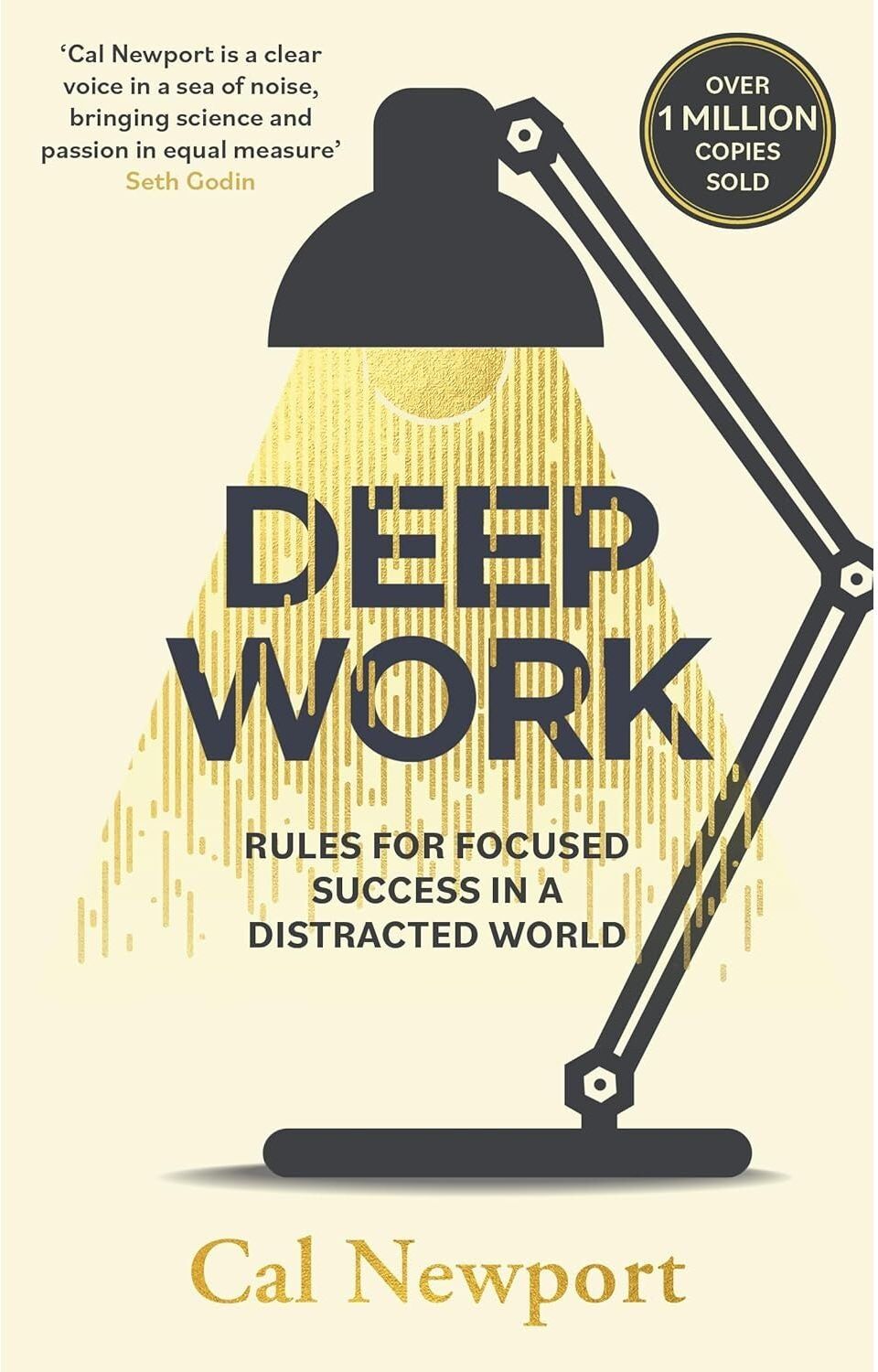
Piatkus Deep Work – Rules for Focused Success in a Distracted World by Cal Newport Productivity, Focus & Career Success BookIn a world full of distractions, the ability to focus deeply is becoming increasingly rare—and increasingly valuable. In Deep Work: Rules for Focused Success in a Distracted World, bestselling author and productivity expert Cal Newport explains why deep, concentrated work is the key to mastering complex skills, producing high-quality results, and standing out in your career. Drawing on neuroscience, psychology, and real-world examples, Newport shows how to eliminate distractions, train your focus, and work with intense concentration. The book combines compelling theory with practical strategies, helping readers build habits that support sustained attention and meaningful productivity in both professional and personal life. What You’ll Learn: Why deep work is essential for success in the modern economy How shallow work undermines productivity and focus Practical rules for building deep work habits Techniques to minimize distractions and digital overload How to produce better results in less time Perfect for professionals, students, creatives, and entrepreneurs, Deep Work is a must-read guide to achieving focus, efficiency, and long-term career success.7,99 £*Shipping: 2,99 £Secure redirect to the provider
-
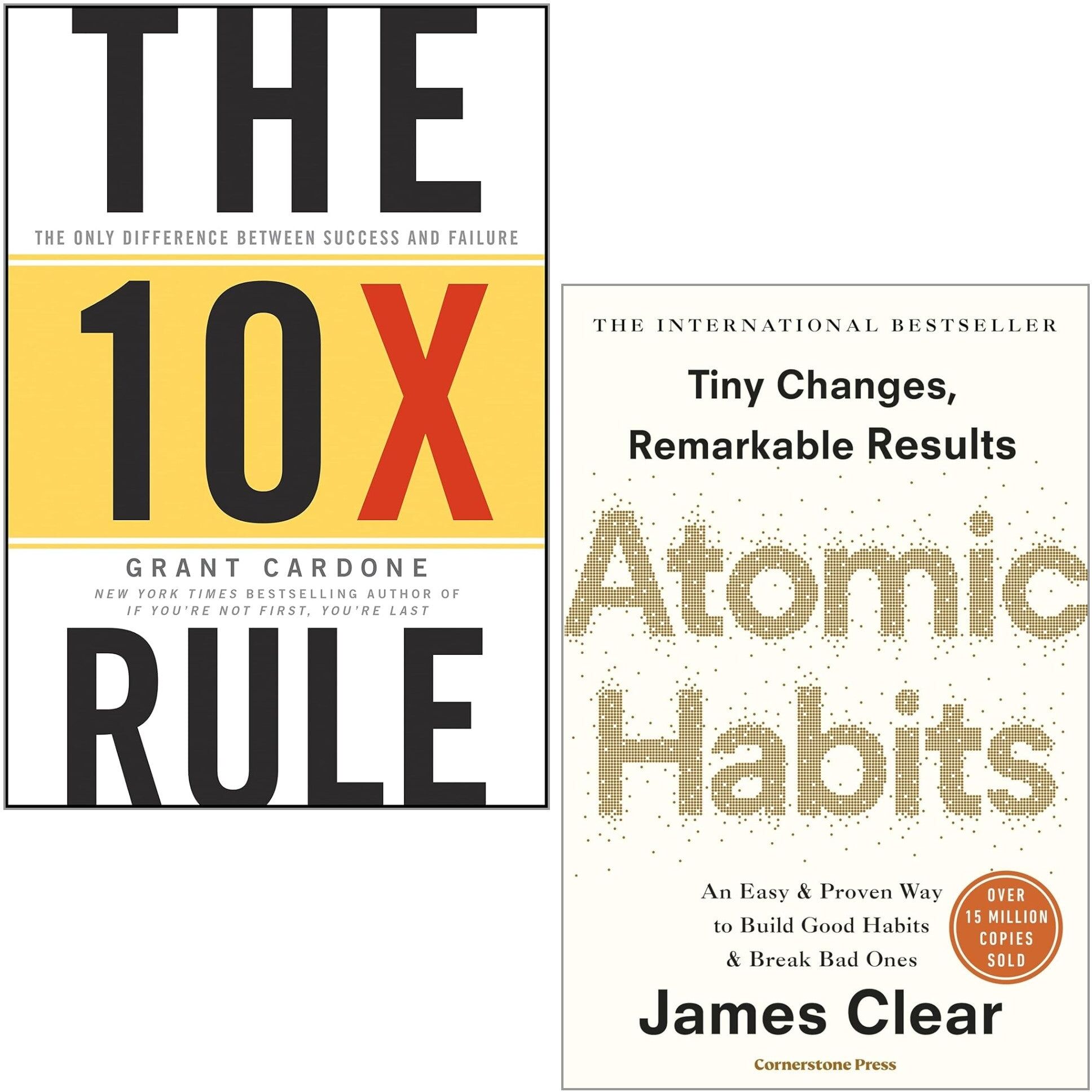
Wiley/Random House Business The 10X Rule [HB] & Atomic Habits [PB] – 2 Books Collection Set by Grant Cardone & James Clear Success, Productivity & Personal Development BooksUpgrade your mindset, habits, and results with The 10X Rule and Atomic Habits – 2 Books Collection Set by Grant Cardone and James Clear. This powerful self-development bundle combines two of the most influential personal growth books of all time. In The 10X Rule, Grant Cardone teaches you how to take massive action, think bigger, and achieve extraordinary success in business and life. Atomic Habits by James Clear reveals how small, consistent habit changes can lead to remarkable long-term improvement. Together, these books provide a complete system for high performance, productivity, goal achievement, and personal transformation—helping you build the habits and mindset needed to succeed. The 10X Rule [Hardcover] Achieve "Massive Action" results and accomplish your business dreams! While most people operate with only three degrees of action-no action, retreat, or normal action-if you're after big goals, you don't want to settle for the ordinary. To reach the next level, you must understand the coveted 4th degree of action. This 4th degree, also know as the 10 X Rule, is that level of action that guarantees companies and individuals realize their goals and dreams. The 10 X Rule unveils the principle of "Massive Action," allowing you to blast through business clichés and risk-aversion while taking concrete steps to reach your dreams. It also demonstrates why people get stuck in the first three actions and how to move into making the 10X Rule a discipline. Find out exactly where to start, what to do, and how to follow up each action you take with more action to achieve Massive Action results. Atomic Habits [Paperback] Transform your life with tiny changes in behaviour, starting now. People think that when you want to change your life, you need to think big. But world-renowned habits expert James Clear has discovered another way. He knows that real change comes from the compound effect of hundreds of small decisions: doing two push-ups a day, waking up five minutes early, or holding a single short phone call. He calls them atomic habits.25,99 £*Shipping: 2,99 £Secure redirect to the provider
-
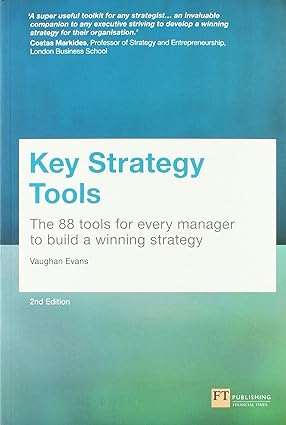
Pearson Key Strategy Tools by Vaughan Evans - 88 Tools for Every Manager to Build a Winning Strategy - Paperback - Business Strategy BookKey Strategy Tools by Vaughan Evans is a comprehensive guide for managers who want to build a winning strategy. Written by strategy consultant Vaughan Evans, this book distils decades of consulting experience into 88 practical tools covering every stage of the strategy process. From market analysis to competitive positioning and implementation, it equips managers, entrepreneurs, and MBA students with a framework for transforming their business into a scalable and valuable asset. The book presents a complete toolkit for strategy development, helping readers to understand why some companies succeed while others struggle, and providing actionable advice on how to achieve success. Published by Pearson, this paperback is a valuable resource for anyone looking to improve their business strategy.2,99 £*Shipping: 2,99 £Secure redirect to the provider

-
Does Kant's deontological ethics contradict Aristotle's eudaemonistic ethics?
Kant's deontological ethics and Aristotle's eudaemonistic ethics have some fundamental differences, but they do not necessarily contradict each other. Kant's ethics focus on duty and the intention behind actions, while Aristotle's ethics emphasize achieving eudaimonia, or human flourishing, through virtuous actions. While Kant's emphasis on duty can sometimes conflict with Aristotle's emphasis on virtue, both ethical theories ultimately aim to guide individuals towards leading a good and moral life. Therefore, while they may approach ethics from different perspectives, they can be seen as complementary rather than contradictory. **
-
Is Nicomachean Ethics the same as Virtue Ethics?
Nicomachean Ethics is a specific work by Aristotle that is considered one of the foundational texts in virtue ethics. While Nicomachean Ethics is a key text within the broader framework of virtue ethics, virtue ethics itself is a broader ethical theory that encompasses various other works and perspectives beyond just Aristotle's. So, while Nicomachean Ethics is a significant part of virtue ethics, they are not exactly the same thing. **
-
Is responsibility ethics the same as future ethics?
Responsibility ethics and future ethics are related but not the same. Responsibility ethics focuses on the moral obligations and duties that individuals and organizations have in the present moment, while future ethics considers the ethical implications of our actions on future generations and the long-term consequences of our choices. While responsibility ethics emphasizes the immediate impact of our actions, future ethics considers the broader and long-term effects of our decisions on the well-being of future generations and the sustainability of the planet. Both are important aspects of ethical decision-making, but they address different time frames and perspectives. **
-
Does ethics still exist nowadays? Is ethics a problem?
Ethics still exist nowadays as a set of moral principles that guide human behavior and decision-making. However, there are instances where ethical considerations are overlooked or compromised in favor of personal gain or convenience, making ethics a problem in society. It is important for individuals and organizations to prioritize ethical behavior to maintain trust, integrity, and social responsibility. Efforts to promote ethical conduct through education, awareness, and accountability can help address ethical challenges in today's world. **

What is ethics?
Ethics is a branch of philosophy that deals with moral principles and values that govern individual behavior and decision-making. It involves distinguishing between right and wrong actions, as well as understanding the consequences of those actions on individuals and society as a whole. Ethics provides a framework for individuals to make ethical choices and behave in a morally responsible manner. It also helps in creating a sense of accountability and integrity in personal and professional relationships. **
What are the differences between deontological ethics and utilitarian ethics?
Deontological ethics, also known as duty-based ethics, focuses on the inherent rightness or wrongness of actions themselves, regardless of their consequences. It emphasizes following moral rules and duties, such as telling the truth or keeping promises, based on principles like the categorical imperative. On the other hand, utilitarian ethics, also known as consequentialist ethics, prioritizes the outcomes or consequences of actions. It aims to maximize overall happiness or well-being for the greatest number of people, often through the calculation of benefits and harms. While deontological ethics emphasizes duty and rules, utilitarian ethics prioritizes the greatest good for the greatest number. **
Top-Angebote
Products related to Ethics:
-
Atlantic Books How Death Becomes Life: Notes from a Transplant Surgeon by Joshua Mezrich - Paperback - Medical Memoir & EthicsIn How Death Becomes Life, transplant surgeon Dr Joshua Mezrich takes readers deep inside the operating theatre, where split-second decisions determine who lives and who dies. Drawing on his career at the University of Wisconsin, Mezrich weaves the remarkable history of transplantation - from early, disastrous experiments to the present day. This memoir is a compelling read for anyone fascinated by medicine, ethics, or the extraordinary courage of doctors, donors, and families who make life-saving miracles possible. The paperback edition of this book is a detailed and intimate account of life inside the operating room, where Mezrich confronts the most profound ethical and human dilemmas in modern medicine. Blending more than a century of medical history with intimate patient stories, Mezrich reveals how organ transplantation transforms tragedy into hope.2,99 £*Shipping: 2,99 £Secure redirect to the provider
-
The Readers Paradise Counseling Skills For Managers by Prof. N.K. Daniel - Paperback - Leadership, Coaching & Workplace Ethics Guide for Managers and HR ProfessionalsCounseling Skills For Managers is a practical guide that helps leaders develop essential counseling skills for the workplace. Written for managers, team leads, HR professionals, and aspiring executives, it covers foundational counseling theory and its strategic application in corporate settings. The book teaches readers how to listen with empathy, structure coaching conversations, resolve role conflicts, and support colleagues through change and difficulty, all while maintaining clear ethical boundaries. This guide is a valuable addition to any professional development or leadership library, offering a unique blend of psychology and management principles in an accessible format.2,99 £*Shipping: 2,99 £Secure redirect to the provider
-
Pan Make Brilliant Work: Lessons on Creativity, Innovation and Success by Rod Judkins - Paperback - Self-Help/Business Creativity Guide, Author ofMake Brilliant Work is an inspiring guide by Rod Judkins, drawing on the real-life stories of visionaries from Frida Kahlo to Steve Jobs. This paperback book reveals the methods and mindsets that turn ordinary effort into extraordinary results. Judkins proves that talent alone never guaranteed success — persistence, risk-taking and original thinking did. A motivating read for anyone wanting to unlock their creative potential at work or in life. The book profiles figures who failed at school, were told they lacked talent, or were fired more than once, yet went on to achieve great things. Written by Rod Judkins, published by Pan Macmillan, this book is a reassuring truth: you don't have to be naturally brilliant to produce brilliant work.2,99 £*Shipping: 2,99 £Secure redirect to the provider
-
Piatkus Deep Work – Rules for Focused Success in a Distracted World by Cal Newport Productivity, Focus & Career Success BookIn a world full of distractions, the ability to focus deeply is becoming increasingly rare—and increasingly valuable. In Deep Work: Rules for Focused Success in a Distracted World, bestselling author and productivity expert Cal Newport explains why deep, concentrated work is the key to mastering complex skills, producing high-quality results, and standing out in your career. Drawing on neuroscience, psychology, and real-world examples, Newport shows how to eliminate distractions, train your focus, and work with intense concentration. The book combines compelling theory with practical strategies, helping readers build habits that support sustained attention and meaningful productivity in both professional and personal life. What You’ll Learn: Why deep work is essential for success in the modern economy How shallow work undermines productivity and focus Practical rules for building deep work habits Techniques to minimize distractions and digital overload How to produce better results in less time Perfect for professionals, students, creatives, and entrepreneurs, Deep Work is a must-read guide to achieving focus, efficiency, and long-term career success.7,99 £*Shipping: 2,99 £Secure redirect to the provider
-
Can you explain virtue ethics, duty ethics, and goods ethics?
Virtue ethics focuses on the character of the individual and emphasizes the development of virtuous traits such as honesty, courage, and compassion. It is concerned with cultivating moral excellence and living a good life. Duty ethics, also known as deontological ethics, is based on the idea that certain actions are inherently right or wrong, regardless of their consequences. It emphasizes the importance of following moral rules and fulfilling one's duties and obligations. Goods ethics, or consequentialism, evaluates the morality of an action based on its outcomes or consequences. It focuses on maximizing the overall good or happiness and considers the potential impact of an action on others. **
-
Is Buddhist ethics comparable to Christian ethics?
Buddhist ethics and Christian ethics share some similarities, such as the emphasis on compassion, love, and non-violence. Both traditions also promote the idea of treating others with kindness and respect. However, there are also significant differences between the two, such as the concept of sin and salvation in Christianity, which is not present in Buddhism. Additionally, the role of divine authority and the concept of God differs between the two traditions. Overall, while there are some common ethical principles, the underlying beliefs and foundations of Buddhist and Christian ethics are distinct. **
-
Does Kant's deontological ethics contradict Aristotle's eudaemonistic ethics?
Kant's deontological ethics and Aristotle's eudaemonistic ethics have some fundamental differences, but they do not necessarily contradict each other. Kant's ethics focus on duty and the intention behind actions, while Aristotle's ethics emphasize achieving eudaimonia, or human flourishing, through virtuous actions. While Kant's emphasis on duty can sometimes conflict with Aristotle's emphasis on virtue, both ethical theories ultimately aim to guide individuals towards leading a good and moral life. Therefore, while they may approach ethics from different perspectives, they can be seen as complementary rather than contradictory. **
-
Is Nicomachean Ethics the same as Virtue Ethics?
Nicomachean Ethics is a specific work by Aristotle that is considered one of the foundational texts in virtue ethics. While Nicomachean Ethics is a key text within the broader framework of virtue ethics, virtue ethics itself is a broader ethical theory that encompasses various other works and perspectives beyond just Aristotle's. So, while Nicomachean Ethics is a significant part of virtue ethics, they are not exactly the same thing. **
Similar search terms for Ethics
-
Wiley/Random House Business The 10X Rule [HB] & Atomic Habits [PB] – 2 Books Collection Set by Grant Cardone & James Clear Success, Productivity & Personal Development BooksUpgrade your mindset, habits, and results with The 10X Rule and Atomic Habits – 2 Books Collection Set by Grant Cardone and James Clear. This powerful self-development bundle combines two of the most influential personal growth books of all time. In The 10X Rule, Grant Cardone teaches you how to take massive action, think bigger, and achieve extraordinary success in business and life. Atomic Habits by James Clear reveals how small, consistent habit changes can lead to remarkable long-term improvement. Together, these books provide a complete system for high performance, productivity, goal achievement, and personal transformation—helping you build the habits and mindset needed to succeed. The 10X Rule [Hardcover] Achieve "Massive Action" results and accomplish your business dreams! While most people operate with only three degrees of action-no action, retreat, or normal action-if you're after big goals, you don't want to settle for the ordinary. To reach the next level, you must understand the coveted 4th degree of action. This 4th degree, also know as the 10 X Rule, is that level of action that guarantees companies and individuals realize their goals and dreams. The 10 X Rule unveils the principle of "Massive Action," allowing you to blast through business clichés and risk-aversion while taking concrete steps to reach your dreams. It also demonstrates why people get stuck in the first three actions and how to move into making the 10X Rule a discipline. Find out exactly where to start, what to do, and how to follow up each action you take with more action to achieve Massive Action results. Atomic Habits [Paperback] Transform your life with tiny changes in behaviour, starting now. People think that when you want to change your life, you need to think big. But world-renowned habits expert James Clear has discovered another way. He knows that real change comes from the compound effect of hundreds of small decisions: doing two push-ups a day, waking up five minutes early, or holding a single short phone call. He calls them atomic habits.25,99 £*Shipping: 2,99 £Secure redirect to the provider
-
Pearson Key Strategy Tools by Vaughan Evans - 88 Tools for Every Manager to Build a Winning Strategy - Paperback - Business Strategy BookKey Strategy Tools by Vaughan Evans is a comprehensive guide for managers who want to build a winning strategy. Written by strategy consultant Vaughan Evans, this book distils decades of consulting experience into 88 practical tools covering every stage of the strategy process. From market analysis to competitive positioning and implementation, it equips managers, entrepreneurs, and MBA students with a framework for transforming their business into a scalable and valuable asset. The book presents a complete toolkit for strategy development, helping readers to understand why some companies succeed while others struggle, and providing actionable advice on how to achieve success. Published by Pearson, this paperback is a valuable resource for anyone looking to improve their business strategy.2,99 £*Shipping: 2,99 £Secure redirect to the provider
-
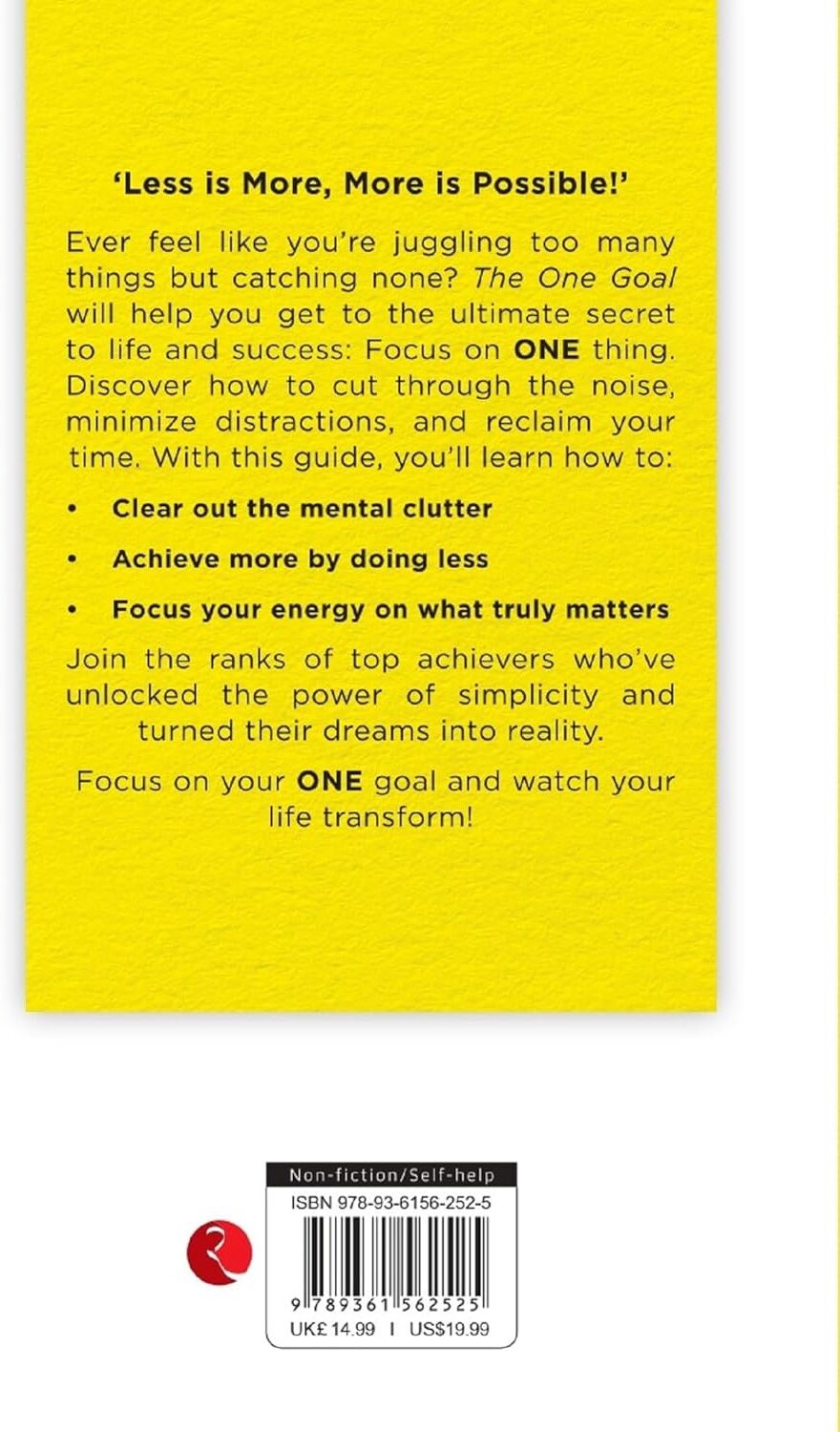
Rupa Publications India The One Goal: The Uncomplicated Guide To Success by Patrick Rayne - Paperback Self-Help Book on Focus, Productivity & Achieving SuccessDiscover a refreshingly direct self-help guide in 'The One Goal: The Uncomplicated Guide To Success' by Patrick Rayne. This paperback strips success down to its essentials, showing readers how to cut through distraction, quieten mental noise, and channel energy toward the one goal that genuinely matters. It's a practical, no-nonsense read for anyone who feels busy but unproductive. The book argues that modern life pushes us toward constant multitasking, and that this scattergun approach is precisely why so many ambitious people stall. Instead of chasing everything at once, the book makes the case for narrowing your focus, not widening it. Published by Rupa Publications India, this book is suitable for adult readers and general readership.2,99 £*Shipping: 2,99 £Secure redirect to the provider
-
The Readers Paradise Psychology of Efficiency: Master Your Mind, Maximize Your Output by Rishav - Self-Help Paperback - Non Fiction Productivity BookDeadlines pile up, distractions multiply, and your to-do list never seems to shrink. Psychology of Efficiency: Master Your Mind, Maximize Your Output by Rishav goes beyond standard time-management advice to tackle the real root of low performance: the mind itself. Rather than offering another planner or app, this paperback guide explores the mental frameworks, habits, and triggers that quietly drain focus and output. Readers are shown how to identify exactly where attention leaks occur and how to close those gaps for good, building sustainable, high-level performance from the inside out. This brand new paperback is built around a simple idea: efficiency is first a psychological skill, not a scheduling trick. Rishav draws on practical psychology to show that thoughts shape actions, and actions determine results, so productivity becomes a manageable skill rather than an overwhelming task.2,99 £*Shipping: 2,99 £Secure redirect to the provider
-
Is responsibility ethics the same as future ethics?
Responsibility ethics and future ethics are related but not the same. Responsibility ethics focuses on the moral obligations and duties that individuals and organizations have in the present moment, while future ethics considers the ethical implications of our actions on future generations and the long-term consequences of our choices. While responsibility ethics emphasizes the immediate impact of our actions, future ethics considers the broader and long-term effects of our decisions on the well-being of future generations and the sustainability of the planet. Both are important aspects of ethical decision-making, but they address different time frames and perspectives. **
-
Does ethics still exist nowadays? Is ethics a problem?
Ethics still exist nowadays as a set of moral principles that guide human behavior and decision-making. However, there are instances where ethical considerations are overlooked or compromised in favor of personal gain or convenience, making ethics a problem in society. It is important for individuals and organizations to prioritize ethical behavior to maintain trust, integrity, and social responsibility. Efforts to promote ethical conduct through education, awareness, and accountability can help address ethical challenges in today's world. **
-
What is ethics?
Ethics is a branch of philosophy that deals with moral principles and values that govern individual behavior and decision-making. It involves distinguishing between right and wrong actions, as well as understanding the consequences of those actions on individuals and society as a whole. Ethics provides a framework for individuals to make ethical choices and behave in a morally responsible manner. It also helps in creating a sense of accountability and integrity in personal and professional relationships. **
-
What are the differences between deontological ethics and utilitarian ethics?
Deontological ethics, also known as duty-based ethics, focuses on the inherent rightness or wrongness of actions themselves, regardless of their consequences. It emphasizes following moral rules and duties, such as telling the truth or keeping promises, based on principles like the categorical imperative. On the other hand, utilitarian ethics, also known as consequentialist ethics, prioritizes the outcomes or consequences of actions. It aims to maximize overall happiness or well-being for the greatest number of people, often through the calculation of benefits and harms. While deontological ethics emphasizes duty and rules, utilitarian ethics prioritizes the greatest good for the greatest number. **
* All prices are inclusive of VAT and, if applicable, plus shipping costs. The offer information is based on the details provided by the respective shop and is updated through automated processes. Real-time updates do not occur, so deviations can occur in individual cases. ** Note: Parts of this content were created by AI.