Buy business-center.eu ?
We are moving the project
business-center.eu .
Are you interested in purchasing the domain
business-center.eu ?
domain@kv-gmbh.de · 0541-91531010
Buy business-center.eu ?
How do profitability, productivity, and efficiency differ from each other?
Profitability refers to the ability of a company to generate profit, which is the difference between revenue and expenses. Productivity measures the output of goods or services produced per unit of input, such as labor or capital. Efficiency, on the other hand, focuses on how well resources are utilized to achieve a specific goal, often measured by the ratio of input to output. In summary, profitability is about generating profit, productivity is about output per input, and efficiency is about maximizing output with the resources available. **
To what extent do profitability, productivity, and efficiency differ from each other?
Profitability, productivity, and efficiency are related but distinct concepts in business. Profitability refers to the ability of a company to generate profit from its operations, while productivity measures the output produced per unit of input. Efficiency, on the other hand, focuses on how well resources are utilized to achieve a specific goal. While profitability is ultimately about the bottom line, productivity and efficiency are more about optimizing processes and resources to achieve desired outcomes. In summary, profitability is about financial performance, productivity is about output per input, and efficiency is about resource utilization. **

Similar search terms for From
Top-Angebote
Products related to From:
-
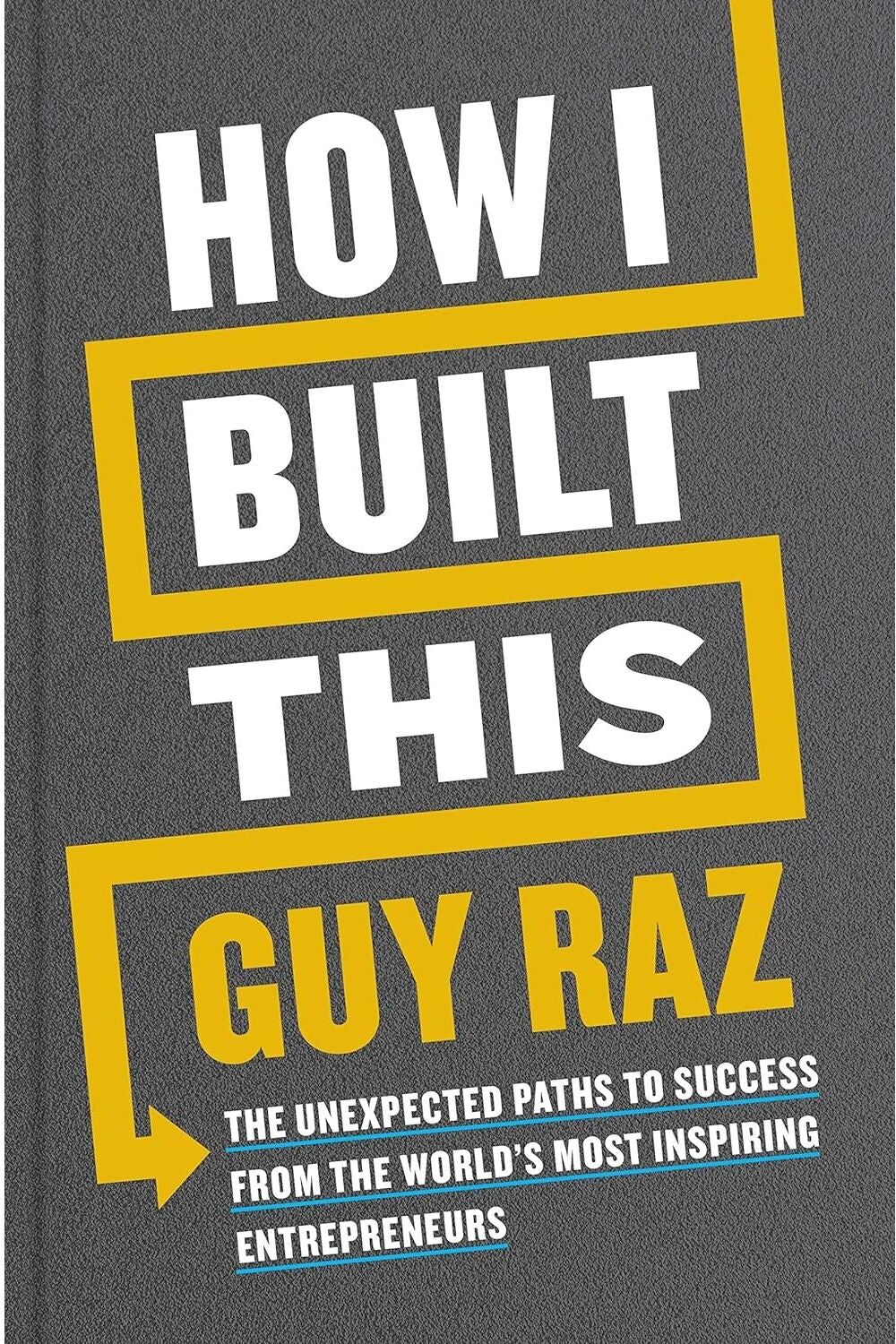
Pan Macmillan How I Built This: The Unexpected Paths to Success by Guy Raz - Hardback Business Book - Inspiring True Stories From Entrepreneurs Behind AirbnbDiscover the inspiring stories behind some of the world's most successful brands in 'How I Built This: The Unexpected Paths to Success' by Guy Raz. This hardback business book is based on Raz's popular NPR podcast of the same name, featuring interviews with the founders of Airbnb, Bumble, Five Guys, Headspace, Allbirds, and Stacy's Pita Chips. Through these real-life journeys, Raz reveals the often unpredictable paths that turned small ideas into major businesses. Meet the entrepreneurs who turned a New Zealand footballer's surplus wool into a footwear brand, a former Buddhist monk who built a meditation app, and a sandwich cart owner whose leftover pita bread became a popular snack. Also included are insights from the founders of Airbnb, Five Guys, and Bumble, as well as James. Written by Guy Raz and published by Pan Macmillan, this book is a must-read for aspiring entrepreneurs and anyone curious about how big ideas get built.8,99 £*Shipping: 2,99 £Secure redirect to the provider
-
Craft Socks from the Toe Up : Essential Techniques and Patterns from Wendy KnitsThis title offers a simple new approach to knitting socks that saves wool and always gives a perfect fit. It features more than 20 fun and beautiful patterns, with a sock for every foot and a pattern for every knitter! It includes how-tos, tips and techniques, as well as the pros and cons behind all the options. Wendy D.Johnson shows knitters a new approach to making socks with "Socks from the Toe Up". This approach will turn even the most reluctant knitter into a toe-up nut, plus it saves wool and always gives a perfect fit. And? No grafting! Wendy provides all the how-tos, tips and techniques need, as well as the pros and cons behind all of the cast-on, toe, heel and bind-off options, gleaned from her years of experience.15,95 £*Shipping: 2,99 £Secure redirect to the provider
-
Pan Make Brilliant Work: Lessons on Creativity, Innovation and Success by Rod Judkins - Paperback - Self-Help/Business Creativity Guide, Author ofMake Brilliant Work is an inspiring guide by Rod Judkins, drawing on the real-life stories of visionaries from Frida Kahlo to Steve Jobs. This paperback book reveals the methods and mindsets that turn ordinary effort into extraordinary results. Judkins proves that talent alone never guaranteed success — persistence, risk-taking and original thinking did. A motivating read for anyone wanting to unlock their creative potential at work or in life. The book profiles figures who failed at school, were told they lacked talent, or were fired more than once, yet went on to achieve great things. Written by Rod Judkins, published by Pan Macmillan, this book is a reassuring truth: you don't have to be naturally brilliant to produce brilliant work.2,99 £*Shipping: 2,99 £Secure redirect to the provider
-
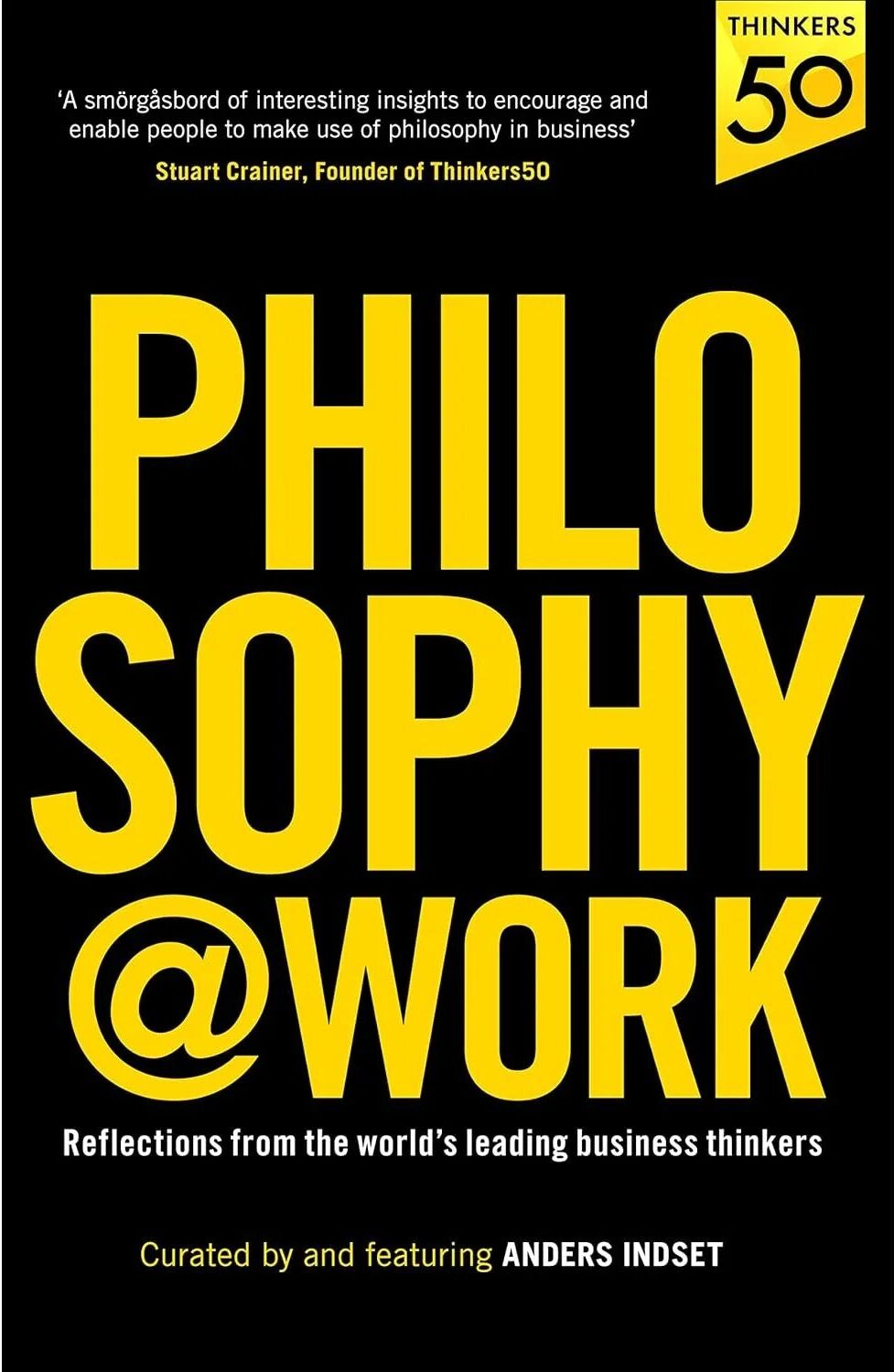
Unbound Philosophy@Work: Reflections from the World's Leading Business Thinkers by Anders Indset - Paperback - Business Leadership BookReflections from the world's leading business thinkers, curated by Norwegian business philosopher Anders Indset, brings together insights from twenty-seven influential thinkers. For decades, management teams have drawn on psychology, sociology, and biology for guidance, yet philosophy has been largely overlooked. This thoughtful collection offers a rich source of inspiration for leaders who want to think more deeply about how they work, lead, and adapt in a fast-changing world. Anders Indset's mission is to bring practical philosophy into the heart of modern organisations, positioning it as a useful tool for business leaders navigating uncertainty, disruption, and constant change. The book gathers contributions and reflections from a stellar lineup of experts.2,99 £*Shipping: 2,99 £Secure redirect to the provider

-
Can economic efficiency and productivity develop mutually?
Yes, economic efficiency and productivity can develop mutually. When businesses and industries become more efficient in their operations, they can produce more output with the same amount of input, leading to increased productivity. Similarly, when productivity increases, it can drive economic efficiency by reducing waste and improving resource allocation. Therefore, as businesses and industries focus on improving efficiency and productivity, they can reinforce and support each other's development. **
-
What is the difference between efficiency and productivity?
Efficiency refers to how well resources are utilized to achieve a specific goal or output, while productivity measures the output or results generated from a specific amount of input or resources. Efficiency focuses on minimizing waste and maximizing output with the resources available, while productivity is a measure of how much output is produced relative to the input used. In essence, efficiency is about doing things right, while productivity is about doing the right things. **
-
What are the connections between efficiency and productivity?
Efficiency and productivity are closely connected in that efficiency refers to the ability to accomplish a task with minimal waste, effort, or cost, while productivity refers to the rate at which goods or services are produced. When a process or system is efficient, it can lead to increased productivity because it allows for more output to be generated with the same amount of input. Conversely, when productivity is high, it often indicates that the resources and processes are being used efficiently. Therefore, improving efficiency can lead to increased productivity, and vice versa, as they both contribute to the overall effectiveness of a business or organization. **
-
Does increasing productivity lead to higher economic efficiency?
Yes, increasing productivity can lead to higher economic efficiency. When a company or economy can produce more output with the same input of resources, it can lead to lower production costs and higher profits. This can also lead to lower prices for consumers, which can increase overall economic welfare. Additionally, higher productivity can lead to increased competitiveness in the global market, which can further contribute to economic efficiency. **

What is the difference between productivity, efficiency, and profitability?
Productivity refers to the amount of output produced per unit of input, such as time or resources. Efficiency, on the other hand, focuses on how well resources are used to achieve a specific goal or output. Profitability, meanwhile, is a measure of how efficiently a company generates profit relative to its costs and expenses. In essence, productivity is about output per input, efficiency is about resource utilization, and profitability is about the bottom line of a business. **
What is the relationship between productivity and economic efficiency?
Productivity and economic efficiency are closely related concepts. Productivity refers to the amount of output produced per unit of input, such as labor or capital. When productivity increases, more output is produced with the same amount of input, leading to greater economic efficiency. Economic efficiency, on the other hand, refers to the optimal allocation of resources to maximize output and minimize waste. Therefore, higher productivity often leads to greater economic efficiency as resources are used more effectively to produce goods and services. Conversely, lower productivity can lead to inefficiencies in resource allocation and reduced overall economic efficiency. **
Top-Angebote
Products related to From:
-
Rethink Press From Stress to Success: How to Build a Business That Operates Without You by John Paul - Paperback - Business & Entrepreneurship GuideFrom Stress to Success is a practical guide for business owners who feel trapped by their own company. Written by serial entrepreneur John Paul, it provides a clear framework for building a business that runs smoothly without constant involvement. The book draws on John Paul's experience systemising multiple companies, showing readers how to move from overwhelmed operator to confident owner, freeing up time while increasing the value and resilience of the business. Many business owners start out chasing freedom, only to end up working longer hours than ever, tied to every decision and firefighting daily problems. This book tackles this head-on, offering a step-by-step method for identifying the bottlenecks that keep an owner indispensable and replacing them with documented, repeatable systems.3,99 £*Shipping: 2,99 £Secure redirect to the provider
-
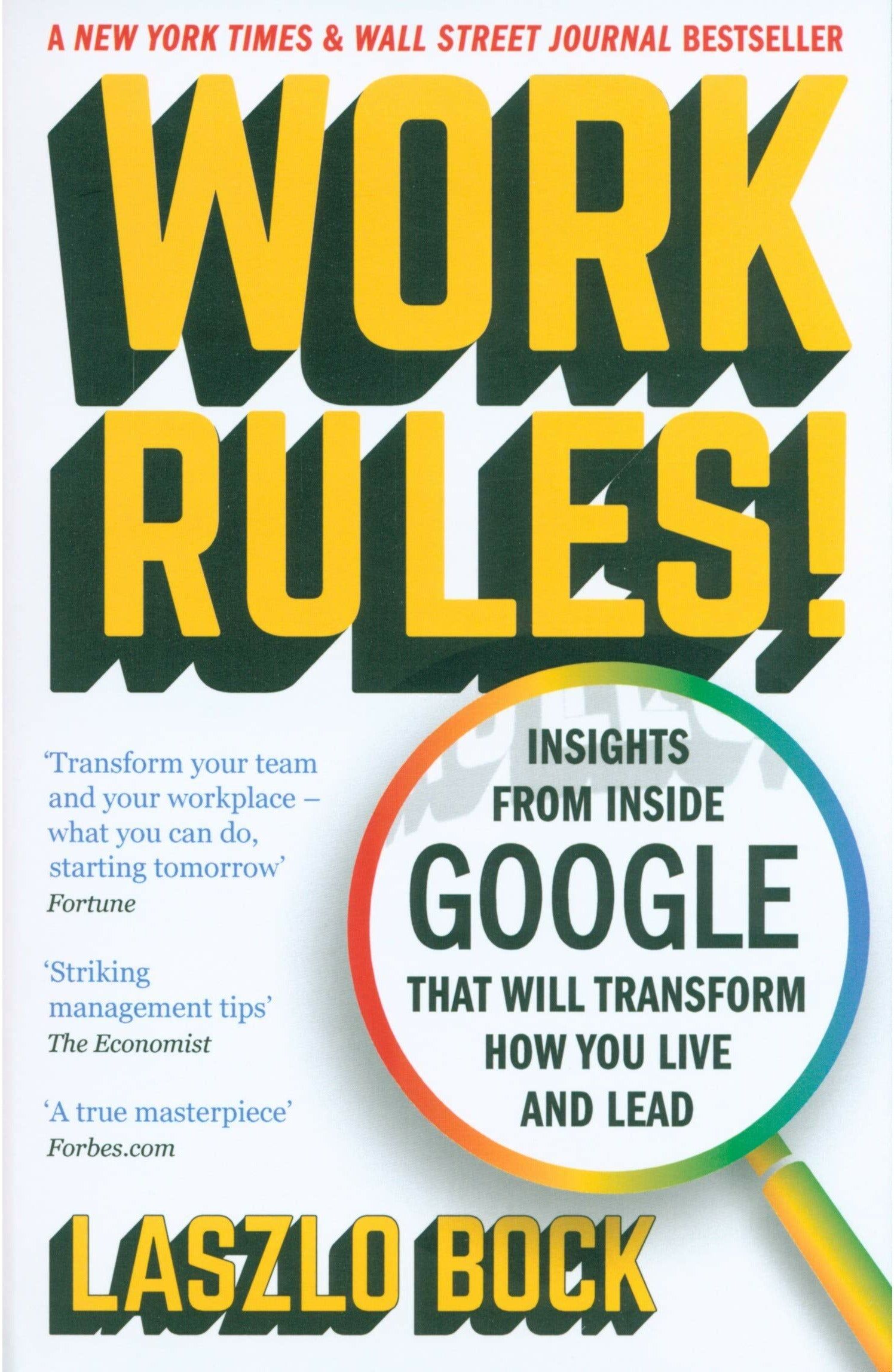
John Murray Work Rules! by Laszlo Bock – Insights from Google on Leadership & Workplace SuccessWork Rules!: Insights from Inside Google That Will Transform How You Live and Lead by Laszlo Bock 'Every year, 2 million people apply for a job at Google - so what's the secret?' Guardian A compelling manifesto with the potential to change how we work and live, Work Rules! offers both a philosophy of the new world of work and a blueprint for attracting the most spectacular talent and ensuring the brightest and best prosper. The way we work is changing - are you?1,99 £*Shipping: 1,99 £Secure redirect to the provider
-
Pan Macmillan How I Built This: The Unexpected Paths to Success by Guy Raz - Hardback Business Book - Inspiring True Stories From Entrepreneurs Behind AirbnbDiscover the inspiring stories behind some of the world's most successful brands in 'How I Built This: The Unexpected Paths to Success' by Guy Raz. This hardback business book is based on Raz's popular NPR podcast of the same name, featuring interviews with the founders of Airbnb, Bumble, Five Guys, Headspace, Allbirds, and Stacy's Pita Chips. Through these real-life journeys, Raz reveals the often unpredictable paths that turned small ideas into major businesses. Meet the entrepreneurs who turned a New Zealand footballer's surplus wool into a footwear brand, a former Buddhist monk who built a meditation app, and a sandwich cart owner whose leftover pita bread became a popular snack. Also included are insights from the founders of Airbnb, Five Guys, and Bumble, as well as James. Written by Guy Raz and published by Pan Macmillan, this book is a must-read for aspiring entrepreneurs and anyone curious about how big ideas get built.8,99 £*Shipping: 2,99 £Secure redirect to the provider
-
Craft Socks from the Toe Up : Essential Techniques and Patterns from Wendy KnitsThis title offers a simple new approach to knitting socks that saves wool and always gives a perfect fit. It features more than 20 fun and beautiful patterns, with a sock for every foot and a pattern for every knitter! It includes how-tos, tips and techniques, as well as the pros and cons behind all the options. Wendy D.Johnson shows knitters a new approach to making socks with "Socks from the Toe Up". This approach will turn even the most reluctant knitter into a toe-up nut, plus it saves wool and always gives a perfect fit. And? No grafting! Wendy provides all the how-tos, tips and techniques need, as well as the pros and cons behind all of the cast-on, toe, heel and bind-off options, gleaned from her years of experience.15,95 £*Shipping: 2,99 £Secure redirect to the provider
-
How do profitability, productivity, and efficiency differ from each other?
Profitability refers to the ability of a company to generate profit, which is the difference between revenue and expenses. Productivity measures the output of goods or services produced per unit of input, such as labor or capital. Efficiency, on the other hand, focuses on how well resources are utilized to achieve a specific goal, often measured by the ratio of input to output. In summary, profitability is about generating profit, productivity is about output per input, and efficiency is about maximizing output with the resources available. **
-
To what extent do profitability, productivity, and efficiency differ from each other?
Profitability, productivity, and efficiency are related but distinct concepts in business. Profitability refers to the ability of a company to generate profit from its operations, while productivity measures the output produced per unit of input. Efficiency, on the other hand, focuses on how well resources are utilized to achieve a specific goal. While profitability is ultimately about the bottom line, productivity and efficiency are more about optimizing processes and resources to achieve desired outcomes. In summary, profitability is about financial performance, productivity is about output per input, and efficiency is about resource utilization. **
-
Can economic efficiency and productivity develop mutually?
Yes, economic efficiency and productivity can develop mutually. When businesses and industries become more efficient in their operations, they can produce more output with the same amount of input, leading to increased productivity. Similarly, when productivity increases, it can drive economic efficiency by reducing waste and improving resource allocation. Therefore, as businesses and industries focus on improving efficiency and productivity, they can reinforce and support each other's development. **
-
What is the difference between efficiency and productivity?
Efficiency refers to how well resources are utilized to achieve a specific goal or output, while productivity measures the output or results generated from a specific amount of input or resources. Efficiency focuses on minimizing waste and maximizing output with the resources available, while productivity is a measure of how much output is produced relative to the input used. In essence, efficiency is about doing things right, while productivity is about doing the right things. **
Similar search terms for From
-
Pan Make Brilliant Work: Lessons on Creativity, Innovation and Success by Rod Judkins - Paperback - Self-Help/Business Creativity Guide, Author ofMake Brilliant Work is an inspiring guide by Rod Judkins, drawing on the real-life stories of visionaries from Frida Kahlo to Steve Jobs. This paperback book reveals the methods and mindsets that turn ordinary effort into extraordinary results. Judkins proves that talent alone never guaranteed success — persistence, risk-taking and original thinking did. A motivating read for anyone wanting to unlock their creative potential at work or in life. The book profiles figures who failed at school, were told they lacked talent, or were fired more than once, yet went on to achieve great things. Written by Rod Judkins, published by Pan Macmillan, this book is a reassuring truth: you don't have to be naturally brilliant to produce brilliant work.2,99 £*Shipping: 2,99 £Secure redirect to the provider
-
Unbound Philosophy@Work: Reflections from the World's Leading Business Thinkers by Anders Indset - Paperback - Business Leadership BookReflections from the world's leading business thinkers, curated by Norwegian business philosopher Anders Indset, brings together insights from twenty-seven influential thinkers. For decades, management teams have drawn on psychology, sociology, and biology for guidance, yet philosophy has been largely overlooked. This thoughtful collection offers a rich source of inspiration for leaders who want to think more deeply about how they work, lead, and adapt in a fast-changing world. Anders Indset's mission is to bring practical philosophy into the heart of modern organisations, positioning it as a useful tool for business leaders navigating uncertainty, disruption, and constant change. The book gathers contributions and reflections from a stellar lineup of experts.2,99 £*Shipping: 2,99 £Secure redirect to the provider
-
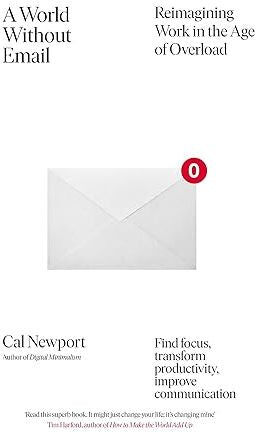
Portfolio Penguin A World Without Email: Find Focus and Transform the Way You Work Forever (from the NYT bestselling productivity expert) by Cal NewportEmails are an integral part of work today. But the 'kind regards', forwards and attachments we check every 5.4 minutes are making us unproductive, stressed and costing businesses millions in untapped potential. Bestselling author of Deep Work and Digital Minimalism, Cal Newport, is here to offer a radical new vision - a world without email. Drawing on sociology, behavioural economics and fascinating case studies of thriving email-free companies, Newport explains how this modern tool doesn't work for our ancient brains and provides solutions you can implement today to transform your workday into one without constant, distracting pings. Revolutionary and practical, A World Without Email will liberate you to do your most profound, fulfilling and creative work - and be happier too.12,99 £*Shipping: 2,99 £Secure redirect to the provider
-
From You Flowers Purple Paradise BouquetThe stunning Purple Paradise Bouquet creates a bold splash of color upon arrival, creating a gift of floral style and design your special recipient will always remember. Weaving together lavender roses, purple stock, lavender Peruvian Lilies, purple...35,99 $*Shipping: 14,99 $Secure redirect to the provider
-
What are the connections between efficiency and productivity?
Efficiency and productivity are closely connected in that efficiency refers to the ability to accomplish a task with minimal waste, effort, or cost, while productivity refers to the rate at which goods or services are produced. When a process or system is efficient, it can lead to increased productivity because it allows for more output to be generated with the same amount of input. Conversely, when productivity is high, it often indicates that the resources and processes are being used efficiently. Therefore, improving efficiency can lead to increased productivity, and vice versa, as they both contribute to the overall effectiveness of a business or organization. **
-
Does increasing productivity lead to higher economic efficiency?
Yes, increasing productivity can lead to higher economic efficiency. When a company or economy can produce more output with the same input of resources, it can lead to lower production costs and higher profits. This can also lead to lower prices for consumers, which can increase overall economic welfare. Additionally, higher productivity can lead to increased competitiveness in the global market, which can further contribute to economic efficiency. **
-
What is the difference between productivity, efficiency, and profitability?
Productivity refers to the amount of output produced per unit of input, such as time or resources. Efficiency, on the other hand, focuses on how well resources are used to achieve a specific goal or output. Profitability, meanwhile, is a measure of how efficiently a company generates profit relative to its costs and expenses. In essence, productivity is about output per input, efficiency is about resource utilization, and profitability is about the bottom line of a business. **
-
What is the relationship between productivity and economic efficiency?
Productivity and economic efficiency are closely related concepts. Productivity refers to the amount of output produced per unit of input, such as labor or capital. When productivity increases, more output is produced with the same amount of input, leading to greater economic efficiency. Economic efficiency, on the other hand, refers to the optimal allocation of resources to maximize output and minimize waste. Therefore, higher productivity often leads to greater economic efficiency as resources are used more effectively to produce goods and services. Conversely, lower productivity can lead to inefficiencies in resource allocation and reduced overall economic efficiency. **
* All prices are inclusive of VAT and, if applicable, plus shipping costs. The offer information is based on the details provided by the respective shop and is updated through automated processes. Real-time updates do not occur, so deviations can occur in individual cases. ** Note: Parts of this content were created by AI.