Buy business-center.eu ?
We are moving the project
business-center.eu .
Are you interested in purchasing the domain
business-center.eu ?
domain@kv-gmbh.de · 0541-91531010
Buy business-center.eu ?
United Nations subsidiary
A United Nations subsidiary is an organization that operates under the umbrella of the United Nations but has a specific focus or mandate. These subsidiaries are established to address specific issues such as health, education, or human rights. They work in coordination with the United Nations to achieve common goals and objectives, while also having a degree of autonomy to carry out their specialized work. **
United Nations subsidiaries
United Nations subsidiaries are specialized agencies, funds, and programs that operate under the umbrella of the United Nations to address specific issues such as health, education, and humanitarian assistance. These subsidiaries have their own governing bodies and budgets, but work in coordination with the UN to achieve common goals. Some well-known UN subsidiaries include UNICEF, the World Health Organization (WHO), and the World Food Programme (WFP). These entities play a crucial role in implementing UN initiatives and providing assistance to countries in need around the world. **

Similar search terms for Nations
Top-Angebote
Products related to Nations:
-
Icon Books Inside Qatar: Hidden Stories from One of the Richest Nations on Earth by John McManusAN INTIMATE PORTRAIT OF LIFE IN ONE OF THE WORLD'S RICHEST NATIONS AHEAD OF THE FIFA 2022 WORLD CUPJust 75 years ago, the Gulf nation of Qatar was a backwater, reliant on pearl diving. Today it is a gas-laden parvenu with seemingly limitless wealth and ambition. Skyscrapers, museums and futuristic football stadiums rise out of the desert and Ferraris race through the streets. But in the shadows, migrant workers toil in the heat for risible amounts.Inside Qatar reveals how real people live in this surreal place, a land of both great opportunity and great iniquity. Ahead of Qatar's time in the limelight as host of the 2022 FIFA Men's World Cup, anthropologist John McManus lifts a lid on the hidden worlds of its gilded elite, its spin doctors and thrill seekers, its manual labourers and domestic workers.The sum of their tales is not some exotic cabinet of curiosities. Instead, Inside Qatar opens a window onto the global problems - of unfettered capitalism, growing inequality and climate change - that concern us all.7,95 £*Shipping: 2,99 £Secure redirect to the provider
-
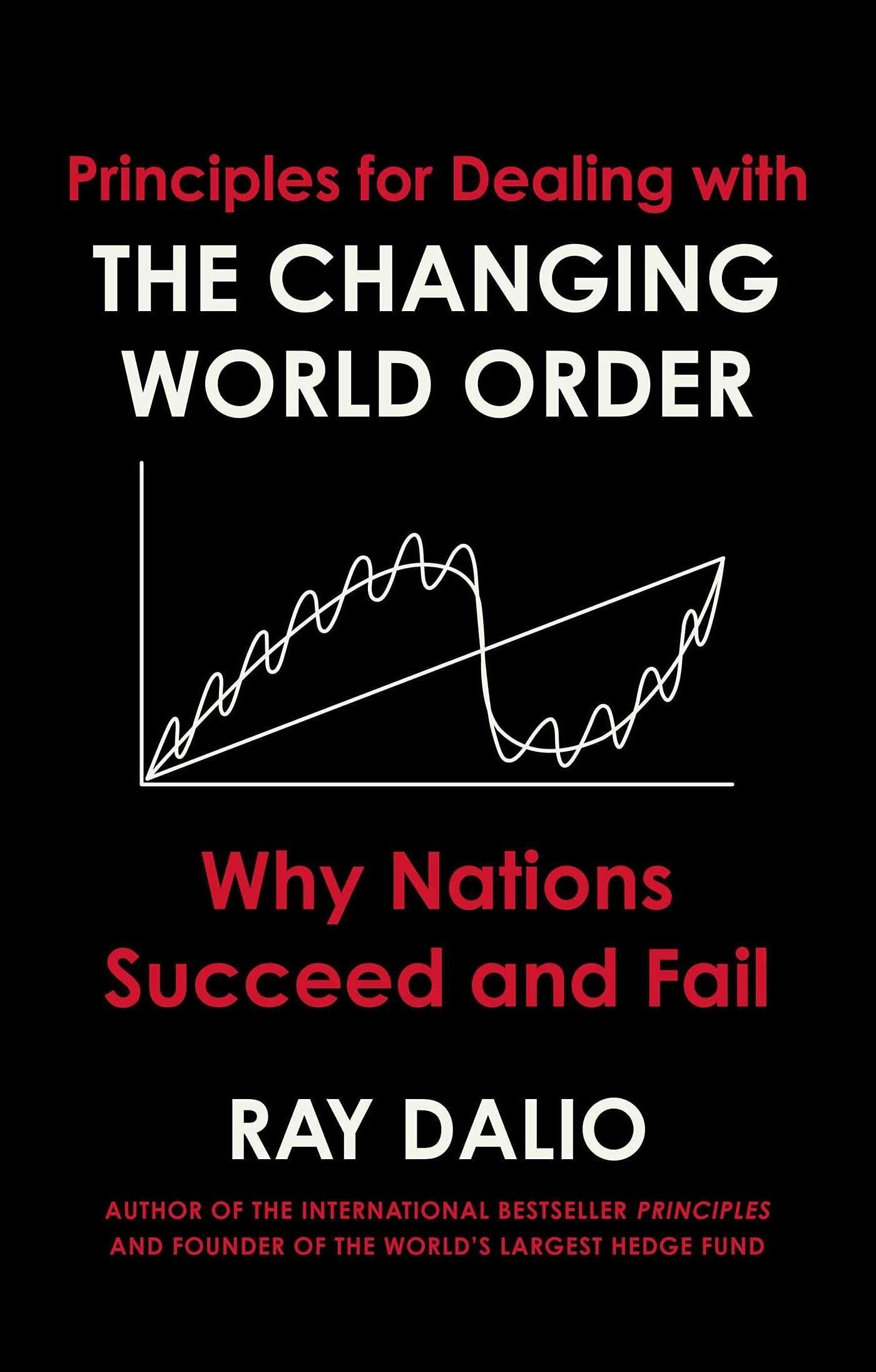
Simon & Schuster UK Principles for Dealing with the Changing World Order: Why Nations Succeed or Fail by Ray DalioFrom legendary investor Ray Dalio, author of the international bestseller Principles, who has spent half a century studying global economies and markets, Principles for Dealing with the Changing World Order examines history’s most turbulent economic and political periods to reveal why the times ahead will likely be radically different from those we’ve experienced in our lifetimes - but similar to those that have happened many times before. A few years ago, Ray Dalio noticed a confluence of political and economic conditions he hadn’t encountered before. They included huge debts and zero or near-zero interest rates that led to massive printing of money in the world’s three major reserve currencies; big political and social conflicts within countries, especially the US, due to the largest wealth, political and values disparities in more than 100 years; and the rising of a world power (China) to challenge the existing world power (US) and the existing world order. The last time that this confluence occurred was between 1930 and 1945. This realisation sent Dalio on a search for the repeating patterns and cause/effect relationships underlying all major changes in wealth and power over the last 500 years. In this remarkable and timely addition to his Principles series, Dalio brings readers along for his study of the major empires - including the Dutch, the British and the American - putting into perspective the 'Big Cycle' that has driven the successes and failures of all the world’s major countries throughout history. Dalio reveals the timeless and universal forces behind these shifts and uses them to look into the future, offering practical principles for positioning oneself for what’s ahead.13,99 £*Shipping: 2,99 £Secure redirect to the provider
-
Pan Make Brilliant Work: Lessons on Creativity, Innovation and Success by Rod Judkins - Paperback - Self-Help/Business Creativity Guide, Author ofMake Brilliant Work is an inspiring guide by Rod Judkins, drawing on the real-life stories of visionaries from Frida Kahlo to Steve Jobs. This paperback book reveals the methods and mindsets that turn ordinary effort into extraordinary results. Judkins proves that talent alone never guaranteed success — persistence, risk-taking and original thinking did. A motivating read for anyone wanting to unlock their creative potential at work or in life. The book profiles figures who failed at school, were told they lacked talent, or were fired more than once, yet went on to achieve great things. Written by Rod Judkins, published by Pan Macmillan, this book is a reassuring truth: you don't have to be naturally brilliant to produce brilliant work.2,99 £*Shipping: 2,99 £Secure redirect to the provider
-
Principles for Dealing with the Changing World Order: Why Nations Succeed or Fail by Ray Dalio - Non Fiction - Hardback Simon & SchusterPrinciples for Dealing with the Changing World Order examines history’s most turbulent economic and political periods to reveal why the times ahead will likely be radically different from those we’ve experienced in our lifetimes - but similar to those that have happened many times before. A few years ago, Ray Dalio noticed a confluence of political and economic conditions he hadn’t encountered before. They included huge debts and zero or near-zero interest rates that led to massive printing of money in the world’s three major reserve currencies; big political and social conflicts within countries, especially the US, due to the largest wealth, political and values disparities in more than 100 years; and the rising of a world power (China) to challenge the existing world power (US) and the existing world order. The last time that this confluence occurred was between 1930 and 1945. This realisation sent Dalio on a search for the repeating patterns and cause/effect relationships underlying all major changes in wealth and power over the last 500 years. In this remarkable and timely addition to his Principles series, Dalio brings readers along for his study of the major empires - including the Dutch, the British and the American - putting into perspective the 'Big Cycle' that has driven the successes and failures of all the world’s major countries throughout history. Dalio reveals the timeless and universal forces behind these shifts and uses them to look into the future, offering practical principles for positioning oneself for what’s ahead.13,99 £*Shipping: 2,99 £Secure redirect to the provider



-
What are seafaring nations?
Seafaring nations are countries that have a strong historical or current connection to the sea and maritime activities. These nations often have a long tradition of exploration, trade, and naval power. They rely on the sea for transportation, trade, fishing, and sometimes defense. Seafaring nations typically have a significant portion of their population living in coastal areas and have developed a strong maritime culture. **
-
Which nations are popular?
Some of the most popular nations in the world include the United States, China, India, and Russia. These nations are popular due to their large populations, strong economies, and significant influence on global politics and culture. Additionally, countries like France, Germany, and Japan are also popular due to their rich history, cultural contributions, and economic power. **
-
What is the difference between the United Nations and the League of Nations?
The United Nations and the League of Nations are both international organizations aimed at promoting peace and cooperation among nations. However, the League of Nations was established after World War I and failed to prevent World War II due to its lack of enforcement power. In contrast, the United Nations was founded after World War II with a stronger structure, including the Security Council with the power to enforce decisions, making it more effective in maintaining international peace and security. **
-
Founder of the United Nations
The founder of the United Nations is considered to be President Franklin D. Roosevelt of the United States. He played a key role in the creation of the UN during World War II, with the goal of promoting international cooperation and preventing future conflicts. Roosevelt's vision for a global organization that could maintain peace and security among nations led to the establishment of the United Nations in 1945. **
Why do Western nations get involved?
Western nations often get involved in international conflicts for a variety of reasons, including upholding democratic values, protecting human rights, promoting stability and security, and advancing their own strategic interests. Additionally, Western nations may intervene to prevent the spread of extremism or to fulfill international obligations and commitments. Economic considerations, such as access to resources or markets, can also play a role in their decision to get involved in conflicts around the world. **
What is the preference of nations?
The preference of nations can vary widely, but generally, nations prefer stability, security, and prosperity for their citizens. This often includes a preference for strong economic growth, access to resources, and a peaceful international environment. Nations also often prioritize sovereignty and self-determination, seeking to maintain control over their own affairs and protect their national interests. Additionally, many nations prefer to maintain good relations with other countries in order to facilitate trade, cooperation, and mutual security. **
Top-Angebote
Products related to Nations:
-
Gmt Games Combat Commander Battle Pack 8 Minor Nations Expansion - Board GamesExpands your Combat Commander tabletop experience with new counters and scenario cards for minor nations in World War II. Includes 44 half-inch weapon counters, 40 half-inch control markers, 220 five-eighths-inch unit counters, and 8 scenario cards. Requires compatible core title. Must own either Combat Commander: Europe or Mediterranean.28,00 £*Shipping: 3,95 £Secure redirect to the provider
-
Wilco International LLP The Wealth Of Nations By Adam Smith (Leather Bound)The Wealth of Nations stands as a monumental work in political economy, first published in 1776, where Adam Smith lays out the principles that still shape economic thinking today. This LeatherBound edition presents the full text in a format designed for both study and display. Smith examines how the division of labor boosts productivity, how markets coordinate exchange through self-interest, and how nations grow wealth through trade while navigating the roles of government and institutions. The language is rigorous yet clear, inviting readers from students and professionals to curious readers who want a deep understanding of the forces that govern prices, production, and prosperity. This edition's premium binding adds a sense of permanence to a classic that has influenced policy debates for centuries. It's an ideal choice for a personal library, a classroom reference, or a thoughtful gift for graduates and bibliophiles alike. Whether you are revisiting Smith's arguments for a paper or enjoying them anew, this LeatherBound edition offers a tactile, immersive experience that makes dense economic theory feel accessible and compelling. The compact format invites focused reading sessions, while its durability makes it a long-term reference on any study desk.8,99 £*Shipping: 2,99 £Secure redirect to the provider
-
Icon Books Inside Qatar: Hidden Stories from One of the Richest Nations on Earth by John McManusAN INTIMATE PORTRAIT OF LIFE IN ONE OF THE WORLD'S RICHEST NATIONS AHEAD OF THE FIFA 2022 WORLD CUPJust 75 years ago, the Gulf nation of Qatar was a backwater, reliant on pearl diving. Today it is a gas-laden parvenu with seemingly limitless wealth and ambition. Skyscrapers, museums and futuristic football stadiums rise out of the desert and Ferraris race through the streets. But in the shadows, migrant workers toil in the heat for risible amounts.Inside Qatar reveals how real people live in this surreal place, a land of both great opportunity and great iniquity. Ahead of Qatar's time in the limelight as host of the 2022 FIFA Men's World Cup, anthropologist John McManus lifts a lid on the hidden worlds of its gilded elite, its spin doctors and thrill seekers, its manual labourers and domestic workers.The sum of their tales is not some exotic cabinet of curiosities. Instead, Inside Qatar opens a window onto the global problems - of unfettered capitalism, growing inequality and climate change - that concern us all.7,95 £*Shipping: 2,99 £Secure redirect to the provider
-
Simon & Schuster UK Principles for Dealing with the Changing World Order: Why Nations Succeed or Fail by Ray DalioFrom legendary investor Ray Dalio, author of the international bestseller Principles, who has spent half a century studying global economies and markets, Principles for Dealing with the Changing World Order examines history’s most turbulent economic and political periods to reveal why the times ahead will likely be radically different from those we’ve experienced in our lifetimes - but similar to those that have happened many times before. A few years ago, Ray Dalio noticed a confluence of political and economic conditions he hadn’t encountered before. They included huge debts and zero or near-zero interest rates that led to massive printing of money in the world’s three major reserve currencies; big political and social conflicts within countries, especially the US, due to the largest wealth, political and values disparities in more than 100 years; and the rising of a world power (China) to challenge the existing world power (US) and the existing world order. The last time that this confluence occurred was between 1930 and 1945. This realisation sent Dalio on a search for the repeating patterns and cause/effect relationships underlying all major changes in wealth and power over the last 500 years. In this remarkable and timely addition to his Principles series, Dalio brings readers along for his study of the major empires - including the Dutch, the British and the American - putting into perspective the 'Big Cycle' that has driven the successes and failures of all the world’s major countries throughout history. Dalio reveals the timeless and universal forces behind these shifts and uses them to look into the future, offering practical principles for positioning oneself for what’s ahead.13,99 £*Shipping: 2,99 £Secure redirect to the provider
-
United Nations subsidiary
A United Nations subsidiary is an organization that operates under the umbrella of the United Nations but has a specific focus or mandate. These subsidiaries are established to address specific issues such as health, education, or human rights. They work in coordination with the United Nations to achieve common goals and objectives, while also having a degree of autonomy to carry out their specialized work. **
-
United Nations subsidiaries
United Nations subsidiaries are specialized agencies, funds, and programs that operate under the umbrella of the United Nations to address specific issues such as health, education, and humanitarian assistance. These subsidiaries have their own governing bodies and budgets, but work in coordination with the UN to achieve common goals. Some well-known UN subsidiaries include UNICEF, the World Health Organization (WHO), and the World Food Programme (WFP). These entities play a crucial role in implementing UN initiatives and providing assistance to countries in need around the world. **
-
What are seafaring nations?
Seafaring nations are countries that have a strong historical or current connection to the sea and maritime activities. These nations often have a long tradition of exploration, trade, and naval power. They rely on the sea for transportation, trade, fishing, and sometimes defense. Seafaring nations typically have a significant portion of their population living in coastal areas and have developed a strong maritime culture. **
-
Which nations are popular?
Some of the most popular nations in the world include the United States, China, India, and Russia. These nations are popular due to their large populations, strong economies, and significant influence on global politics and culture. Additionally, countries like France, Germany, and Japan are also popular due to their rich history, cultural contributions, and economic power. **
Similar search terms for Nations
-
Pan Make Brilliant Work: Lessons on Creativity, Innovation and Success by Rod Judkins - Paperback - Self-Help/Business Creativity Guide, Author ofMake Brilliant Work is an inspiring guide by Rod Judkins, drawing on the real-life stories of visionaries from Frida Kahlo to Steve Jobs. This paperback book reveals the methods and mindsets that turn ordinary effort into extraordinary results. Judkins proves that talent alone never guaranteed success — persistence, risk-taking and original thinking did. A motivating read for anyone wanting to unlock their creative potential at work or in life. The book profiles figures who failed at school, were told they lacked talent, or were fired more than once, yet went on to achieve great things. Written by Rod Judkins, published by Pan Macmillan, this book is a reassuring truth: you don't have to be naturally brilliant to produce brilliant work.2,99 £*Shipping: 2,99 £Secure redirect to the provider
-
Principles for Dealing with the Changing World Order: Why Nations Succeed or Fail by Ray Dalio - Non Fiction - Hardback Simon & SchusterPrinciples for Dealing with the Changing World Order examines history’s most turbulent economic and political periods to reveal why the times ahead will likely be radically different from those we’ve experienced in our lifetimes - but similar to those that have happened many times before. A few years ago, Ray Dalio noticed a confluence of political and economic conditions he hadn’t encountered before. They included huge debts and zero or near-zero interest rates that led to massive printing of money in the world’s three major reserve currencies; big political and social conflicts within countries, especially the US, due to the largest wealth, political and values disparities in more than 100 years; and the rising of a world power (China) to challenge the existing world power (US) and the existing world order. The last time that this confluence occurred was between 1930 and 1945. This realisation sent Dalio on a search for the repeating patterns and cause/effect relationships underlying all major changes in wealth and power over the last 500 years. In this remarkable and timely addition to his Principles series, Dalio brings readers along for his study of the major empires - including the Dutch, the British and the American - putting into perspective the 'Big Cycle' that has driven the successes and failures of all the world’s major countries throughout history. Dalio reveals the timeless and universal forces behind these shifts and uses them to look into the future, offering practical principles for positioning oneself for what’s ahead.13,99 £*Shipping: 2,99 £Secure redirect to the provider
-
Piatkus Deep Work – Rules for Focused Success in a Distracted World by Cal Newport Productivity, Focus & Career Success BookIn a world full of distractions, the ability to focus deeply is becoming increasingly rare—and increasingly valuable. In Deep Work: Rules for Focused Success in a Distracted World, bestselling author and productivity expert Cal Newport explains why deep, concentrated work is the key to mastering complex skills, producing high-quality results, and standing out in your career. Drawing on neuroscience, psychology, and real-world examples, Newport shows how to eliminate distractions, train your focus, and work with intense concentration. The book combines compelling theory with practical strategies, helping readers build habits that support sustained attention and meaningful productivity in both professional and personal life. What You’ll Learn: Why deep work is essential for success in the modern economy How shallow work undermines productivity and focus Practical rules for building deep work habits Techniques to minimize distractions and digital overload How to produce better results in less time Perfect for professionals, students, creatives, and entrepreneurs, Deep Work is a must-read guide to achieving focus, efficiency, and long-term career success.7,99 £*Shipping: 2,99 £Secure redirect to the provider
-
Wiley/Random House Business The 10X Rule [HB] & Atomic Habits [PB] – 2 Books Collection Set by Grant Cardone & James Clear Success, Productivity & Personal Development BooksUpgrade your mindset, habits, and results with The 10X Rule and Atomic Habits – 2 Books Collection Set by Grant Cardone and James Clear. This powerful self-development bundle combines two of the most influential personal growth books of all time. In The 10X Rule, Grant Cardone teaches you how to take massive action, think bigger, and achieve extraordinary success in business and life. Atomic Habits by James Clear reveals how small, consistent habit changes can lead to remarkable long-term improvement. Together, these books provide a complete system for high performance, productivity, goal achievement, and personal transformation—helping you build the habits and mindset needed to succeed. The 10X Rule [Hardcover] Achieve "Massive Action" results and accomplish your business dreams! While most people operate with only three degrees of action-no action, retreat, or normal action-if you're after big goals, you don't want to settle for the ordinary. To reach the next level, you must understand the coveted 4th degree of action. This 4th degree, also know as the 10 X Rule, is that level of action that guarantees companies and individuals realize their goals and dreams. The 10 X Rule unveils the principle of "Massive Action," allowing you to blast through business clichés and risk-aversion while taking concrete steps to reach your dreams. It also demonstrates why people get stuck in the first three actions and how to move into making the 10X Rule a discipline. Find out exactly where to start, what to do, and how to follow up each action you take with more action to achieve Massive Action results. Atomic Habits [Paperback] Transform your life with tiny changes in behaviour, starting now. People think that when you want to change your life, you need to think big. But world-renowned habits expert James Clear has discovered another way. He knows that real change comes from the compound effect of hundreds of small decisions: doing two push-ups a day, waking up five minutes early, or holding a single short phone call. He calls them atomic habits.25,99 £*Shipping: 2,99 £Secure redirect to the provider
-
What is the difference between the United Nations and the League of Nations?
The United Nations and the League of Nations are both international organizations aimed at promoting peace and cooperation among nations. However, the League of Nations was established after World War I and failed to prevent World War II due to its lack of enforcement power. In contrast, the United Nations was founded after World War II with a stronger structure, including the Security Council with the power to enforce decisions, making it more effective in maintaining international peace and security. **
-
Founder of the United Nations
The founder of the United Nations is considered to be President Franklin D. Roosevelt of the United States. He played a key role in the creation of the UN during World War II, with the goal of promoting international cooperation and preventing future conflicts. Roosevelt's vision for a global organization that could maintain peace and security among nations led to the establishment of the United Nations in 1945. **
-
Why do Western nations get involved?
Western nations often get involved in international conflicts for a variety of reasons, including upholding democratic values, protecting human rights, promoting stability and security, and advancing their own strategic interests. Additionally, Western nations may intervene to prevent the spread of extremism or to fulfill international obligations and commitments. Economic considerations, such as access to resources or markets, can also play a role in their decision to get involved in conflicts around the world. **
-
What is the preference of nations?
The preference of nations can vary widely, but generally, nations prefer stability, security, and prosperity for their citizens. This often includes a preference for strong economic growth, access to resources, and a peaceful international environment. Nations also often prioritize sovereignty and self-determination, seeking to maintain control over their own affairs and protect their national interests. Additionally, many nations prefer to maintain good relations with other countries in order to facilitate trade, cooperation, and mutual security. **
* All prices are inclusive of VAT and, if applicable, plus shipping costs. The offer information is based on the details provided by the respective shop and is updated through automated processes. Real-time updates do not occur, so deviations can occur in individual cases. ** Note: Parts of this content were created by AI.