Buy business-center.eu ?
We are moving the project
business-center.eu .
Are you interested in purchasing the domain
business-center.eu ?
domain@kv-gmbh.de · 0541-91531010
Buy business-center.eu ?
Can economic efficiency and productivity develop mutually?
Yes, economic efficiency and productivity can develop mutually. When businesses and industries become more efficient in their operations, they can produce more output with the same amount of input, leading to increased productivity. Similarly, when productivity increases, it can drive economic efficiency by reducing waste and improving resource allocation. Therefore, as businesses and industries focus on improving efficiency and productivity, they can reinforce and support each other's development. **
What is the difference between efficiency and productivity?
Efficiency refers to how well resources are utilized to achieve a specific goal or output, while productivity measures the output or results generated from a specific amount of input or resources. Efficiency focuses on minimizing waste and maximizing output with the resources available, while productivity is a measure of how much output is produced relative to the input used. In essence, efficiency is about doing things right, while productivity is about doing the right things. **


Similar search terms for Self
Top-Angebote
Products related to Self:
-
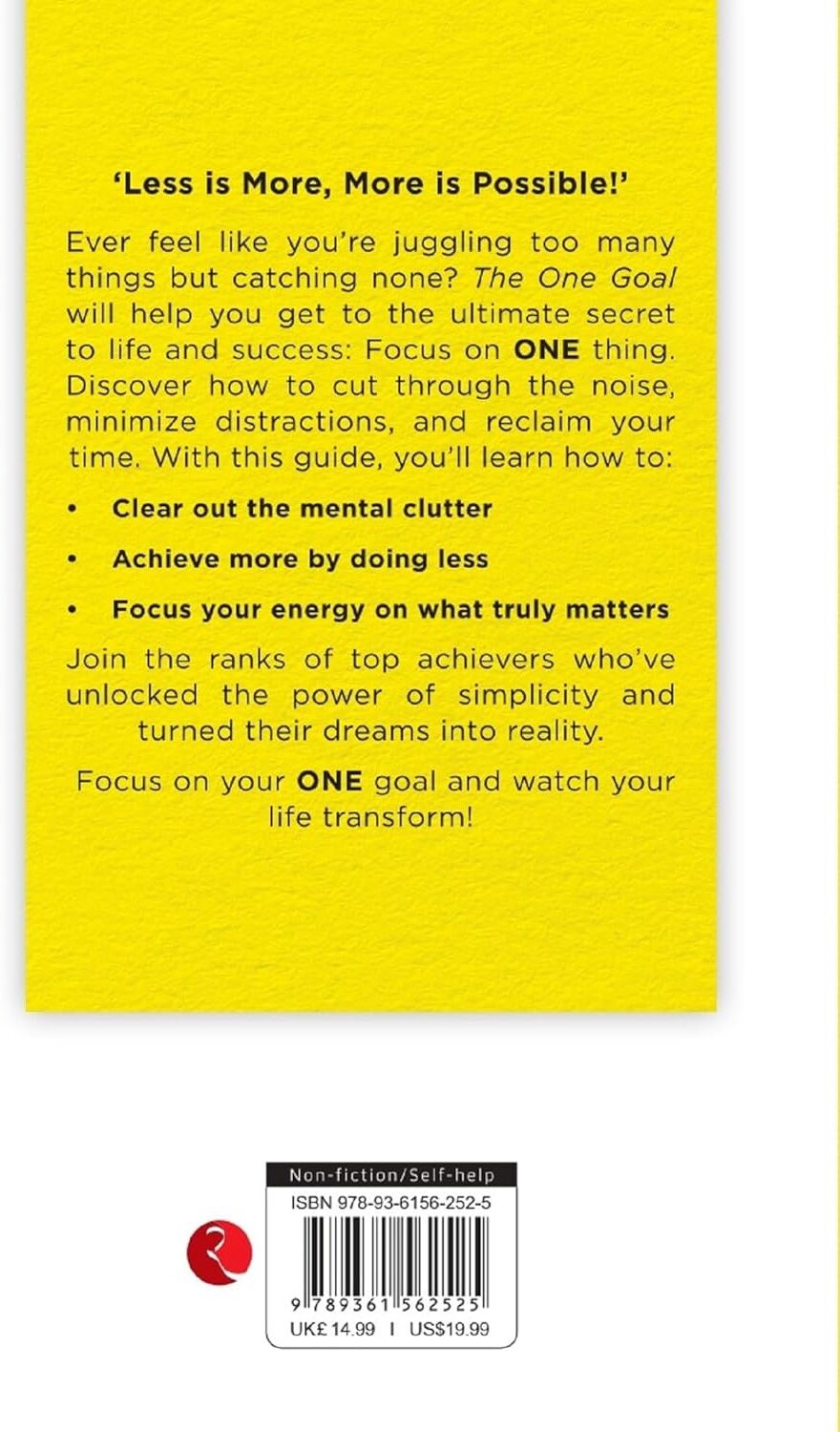
Rupa Publications India The One Goal: The Uncomplicated Guide To Success by Patrick Rayne - Paperback Self-Help Book on Focus, Productivity & Achieving SuccessDiscover a refreshingly direct self-help guide in 'The One Goal: The Uncomplicated Guide To Success' by Patrick Rayne. This paperback strips success down to its essentials, showing readers how to cut through distraction, quieten mental noise, and channel energy toward the one goal that genuinely matters. It's a practical, no-nonsense read for anyone who feels busy but unproductive. The book argues that modern life pushes us toward constant multitasking, and that this scattergun approach is precisely why so many ambitious people stall. Instead of chasing everything at once, the book makes the case for narrowing your focus, not widening it. Published by Rupa Publications India, this book is suitable for adult readers and general readership.2,99 £*Shipping: 2,99 £Secure redirect to the provider
-
Work Wisely, Win Big: Transforming Efforts Into Success by Peter Langston - Rupa Publications - New Paperback - Self-Help & ProductivityTransforming efforts into success is a goal many of us strive for. Work Wisely, Win Big by Peter Langston offers a practical guide to achieving this goal. The book challenges the conventional idea that success is a reward for grinding endlessly and instead argues that sustainable achievement comes from sharper decision-making, better prioritization, and playing to one's natural strengths. Written in an accessible style, this book is aimed at professionals, students, and anyone looking to get more done without burning out. It's a timely read for a world that increasingly values efficiency over exhaustion. Peter Langston lays out a framework for identifying which tasks genuinely move the needle and which are simply busywork. This book is a valuable resource for anyone seeking to work more effectively and achieve their goals.2,99 £*Shipping: 2,99 £Secure redirect to the provider
-
The Readers Paradise Psychology of Efficiency: Master Your Mind, Maximize Your Output by Rishav - Self-Help Paperback - Non Fiction Productivity BookDeadlines pile up, distractions multiply, and your to-do list never seems to shrink. Psychology of Efficiency: Master Your Mind, Maximize Your Output by Rishav goes beyond standard time-management advice to tackle the real root of low performance: the mind itself. Rather than offering another planner or app, this paperback guide explores the mental frameworks, habits, and triggers that quietly drain focus and output. Readers are shown how to identify exactly where attention leaks occur and how to close those gaps for good, building sustainable, high-level performance from the inside out. This brand new paperback is built around a simple idea: efficiency is first a psychological skill, not a scheduling trick. Rishav draws on practical psychology to show that thoughts shape actions, and actions determine results, so productivity becomes a manageable skill rather than an overwhelming task.2,99 £*Shipping: 2,99 £Secure redirect to the provider
-
Rupa Publications Success Through a Positive Mental Attitude by Napoleon Hill & W. Clement Stone - Paperback - Self-Help Classic for Personal Growth & SuccessSuccess Through a Positive Mental Attitude is a timeless self-help classic co-written by Napoleon Hill, author of Think and Grow Rich, and self-made insurance millionaire W. Clement Stone. First published decades ago, the book distills the authors' famous 'PMA' philosophy into practical, actionable steps. This brand-new paperback edition, published by Rupa Publications, brings one of the most influential personal-development books of the century to readers seeking motivation and direction. Napoleon Hill and W. Clement Stone teamed up to create one of the most enduring partnerships in the personal development world, and the result was a book that has helped millions of readers unlock their hidden potential. At its heart is the idea of the 'invisible talisman' every person carries: on one side, the letters PMA for Positive Mental Attitude; on the other, the potential for personal growth and success.2,99 £*Shipping: 2,99 £Secure redirect to the provider


-
What are the connections between efficiency and productivity?
Efficiency and productivity are closely connected in that efficiency refers to the ability to accomplish a task with minimal waste, effort, or cost, while productivity refers to the rate at which goods or services are produced. When a process or system is efficient, it can lead to increased productivity because it allows for more output to be generated with the same amount of input. Conversely, when productivity is high, it often indicates that the resources and processes are being used efficiently. Therefore, improving efficiency can lead to increased productivity, and vice versa, as they both contribute to the overall effectiveness of a business or organization. **
-
Does increasing productivity lead to higher economic efficiency?
Yes, increasing productivity can lead to higher economic efficiency. When a company or economy can produce more output with the same input of resources, it can lead to lower production costs and higher profits. This can also lead to lower prices for consumers, which can increase overall economic welfare. Additionally, higher productivity can lead to increased competitiveness in the global market, which can further contribute to economic efficiency. **
-
What is the difference between productivity, efficiency, and profitability?
Productivity refers to the amount of output produced per unit of input, such as time or resources. Efficiency, on the other hand, focuses on how well resources are used to achieve a specific goal or output. Profitability, meanwhile, is a measure of how efficiently a company generates profit relative to its costs and expenses. In essence, productivity is about output per input, efficiency is about resource utilization, and profitability is about the bottom line of a business. **
-
What is the relationship between productivity and economic efficiency?
Productivity and economic efficiency are closely related concepts. Productivity refers to the amount of output produced per unit of input, such as labor or capital. When productivity increases, more output is produced with the same amount of input, leading to greater economic efficiency. Economic efficiency, on the other hand, refers to the optimal allocation of resources to maximize output and minimize waste. Therefore, higher productivity often leads to greater economic efficiency as resources are used more effectively to produce goods and services. Conversely, lower productivity can lead to inefficiencies in resource allocation and reduced overall economic efficiency. **

What is the connection between PV inverters, self-consumption, and efficiency?
PV inverters are essential components of solar energy systems, as they convert the direct current (DC) electricity generated by solar panels into alternating current (AC) electricity that can be used in homes or fed into the grid. Self-consumption refers to the practice of using the electricity generated by solar panels on-site, rather than exporting it to the grid. Efficient PV inverters are crucial for maximizing self-consumption, as they ensure that the electricity generated by the solar panels is converted and used effectively within the home. By optimizing the efficiency of PV inverters, more of the solar energy generated can be used on-site, reducing the reliance on grid electricity and maximizing the benefits of solar power for homeowners. **
What does growth mean in relation to self-destruction?
Growth in relation to self-destruction means the process of personal development and improvement in the face of destructive behaviors or tendencies. It involves recognizing and addressing self-destructive patterns, and actively working towards positive change and healing. This can include seeking therapy, practicing self-care, and making healthier choices in order to overcome destructive habits and foster personal growth. Ultimately, growth in relation to self-destruction means choosing to move towards a more fulfilling and positive way of living. **
Top-Angebote
Products related to Self:
-
Pan Make Brilliant Work: Lessons on Creativity, Innovation and Success by Rod Judkins - Paperback - Self-Help/Business Creativity Guide, Author ofMake Brilliant Work is an inspiring guide by Rod Judkins, drawing on the real-life stories of visionaries from Frida Kahlo to Steve Jobs. This paperback book reveals the methods and mindsets that turn ordinary effort into extraordinary results. Judkins proves that talent alone never guaranteed success — persistence, risk-taking and original thinking did. A motivating read for anyone wanting to unlock their creative potential at work or in life. The book profiles figures who failed at school, were told they lacked talent, or were fired more than once, yet went on to achieve great things. Written by Rod Judkins, published by Pan Macmillan, this book is a reassuring truth: you don't have to be naturally brilliant to produce brilliant work.2,99 £*Shipping: 2,99 £Secure redirect to the provider
-
Stop Doing That Sh*t by Gary John Bishop - Thorsons Paperback Self Help Book - End Self-Sabotage - Personal Growth & Productivity GuideStop Doing That Sh*t by Gary John Bishop is a follow-up to his New York Times bestseller Unfu*k Yourself. This paperback edition tackles the destructive patterns that sabotage careers, relationships, and finances. Rather than dwelling on theory, Bishop delivers a practical roadmap to identify and break these cycles for good. It's an ideal pick for readers seeking honest personal development guidance that produces real change. In Stop Doing That Sh*t, Gary John Bishop shows readers how to interrupt the self-sabotaging loops that keep them stuck. Whether it's repeatedly choosing the wrong partner, failing to save money, or undermining career opportunities, Bishop argues that concrete action is necessary to overcome these patterns. This book is a direct and no-nonsense guide to personal growth, ideal for readers who want to make lasting changes in their lives.6,99 £*Shipping: 2,99 £Secure redirect to the provider
-
Rupa Publications India The One Goal: The Uncomplicated Guide To Success by Patrick Rayne - Paperback Self-Help Book on Focus, Productivity & Achieving SuccessDiscover a refreshingly direct self-help guide in 'The One Goal: The Uncomplicated Guide To Success' by Patrick Rayne. This paperback strips success down to its essentials, showing readers how to cut through distraction, quieten mental noise, and channel energy toward the one goal that genuinely matters. It's a practical, no-nonsense read for anyone who feels busy but unproductive. The book argues that modern life pushes us toward constant multitasking, and that this scattergun approach is precisely why so many ambitious people stall. Instead of chasing everything at once, the book makes the case for narrowing your focus, not widening it. Published by Rupa Publications India, this book is suitable for adult readers and general readership.2,99 £*Shipping: 2,99 £Secure redirect to the provider
-
Work Wisely, Win Big: Transforming Efforts Into Success by Peter Langston - Rupa Publications - New Paperback - Self-Help & ProductivityTransforming efforts into success is a goal many of us strive for. Work Wisely, Win Big by Peter Langston offers a practical guide to achieving this goal. The book challenges the conventional idea that success is a reward for grinding endlessly and instead argues that sustainable achievement comes from sharper decision-making, better prioritization, and playing to one's natural strengths. Written in an accessible style, this book is aimed at professionals, students, and anyone looking to get more done without burning out. It's a timely read for a world that increasingly values efficiency over exhaustion. Peter Langston lays out a framework for identifying which tasks genuinely move the needle and which are simply busywork. This book is a valuable resource for anyone seeking to work more effectively and achieve their goals.2,99 £*Shipping: 2,99 £Secure redirect to the provider
-
Can economic efficiency and productivity develop mutually?
Yes, economic efficiency and productivity can develop mutually. When businesses and industries become more efficient in their operations, they can produce more output with the same amount of input, leading to increased productivity. Similarly, when productivity increases, it can drive economic efficiency by reducing waste and improving resource allocation. Therefore, as businesses and industries focus on improving efficiency and productivity, they can reinforce and support each other's development. **
-
What is the difference between efficiency and productivity?
Efficiency refers to how well resources are utilized to achieve a specific goal or output, while productivity measures the output or results generated from a specific amount of input or resources. Efficiency focuses on minimizing waste and maximizing output with the resources available, while productivity is a measure of how much output is produced relative to the input used. In essence, efficiency is about doing things right, while productivity is about doing the right things. **
-
What are the connections between efficiency and productivity?
Efficiency and productivity are closely connected in that efficiency refers to the ability to accomplish a task with minimal waste, effort, or cost, while productivity refers to the rate at which goods or services are produced. When a process or system is efficient, it can lead to increased productivity because it allows for more output to be generated with the same amount of input. Conversely, when productivity is high, it often indicates that the resources and processes are being used efficiently. Therefore, improving efficiency can lead to increased productivity, and vice versa, as they both contribute to the overall effectiveness of a business or organization. **
-
Does increasing productivity lead to higher economic efficiency?
Yes, increasing productivity can lead to higher economic efficiency. When a company or economy can produce more output with the same input of resources, it can lead to lower production costs and higher profits. This can also lead to lower prices for consumers, which can increase overall economic welfare. Additionally, higher productivity can lead to increased competitiveness in the global market, which can further contribute to economic efficiency. **
Similar search terms for Self
-
The Readers Paradise Psychology of Efficiency: Master Your Mind, Maximize Your Output by Rishav - Self-Help Paperback - Non Fiction Productivity BookDeadlines pile up, distractions multiply, and your to-do list never seems to shrink. Psychology of Efficiency: Master Your Mind, Maximize Your Output by Rishav goes beyond standard time-management advice to tackle the real root of low performance: the mind itself. Rather than offering another planner or app, this paperback guide explores the mental frameworks, habits, and triggers that quietly drain focus and output. Readers are shown how to identify exactly where attention leaks occur and how to close those gaps for good, building sustainable, high-level performance from the inside out. This brand new paperback is built around a simple idea: efficiency is first a psychological skill, not a scheduling trick. Rishav draws on practical psychology to show that thoughts shape actions, and actions determine results, so productivity becomes a manageable skill rather than an overwhelming task.2,99 £*Shipping: 2,99 £Secure redirect to the provider
-
Rupa Publications Success Through a Positive Mental Attitude by Napoleon Hill & W. Clement Stone - Paperback - Self-Help Classic for Personal Growth & SuccessSuccess Through a Positive Mental Attitude is a timeless self-help classic co-written by Napoleon Hill, author of Think and Grow Rich, and self-made insurance millionaire W. Clement Stone. First published decades ago, the book distills the authors' famous 'PMA' philosophy into practical, actionable steps. This brand-new paperback edition, published by Rupa Publications, brings one of the most influential personal-development books of the century to readers seeking motivation and direction. Napoleon Hill and W. Clement Stone teamed up to create one of the most enduring partnerships in the personal development world, and the result was a book that has helped millions of readers unlock their hidden potential. At its heart is the idea of the 'invisible talisman' every person carries: on one side, the letters PMA for Positive Mental Attitude; on the other, the potential for personal growth and success.2,99 £*Shipping: 2,99 £Secure redirect to the provider
-
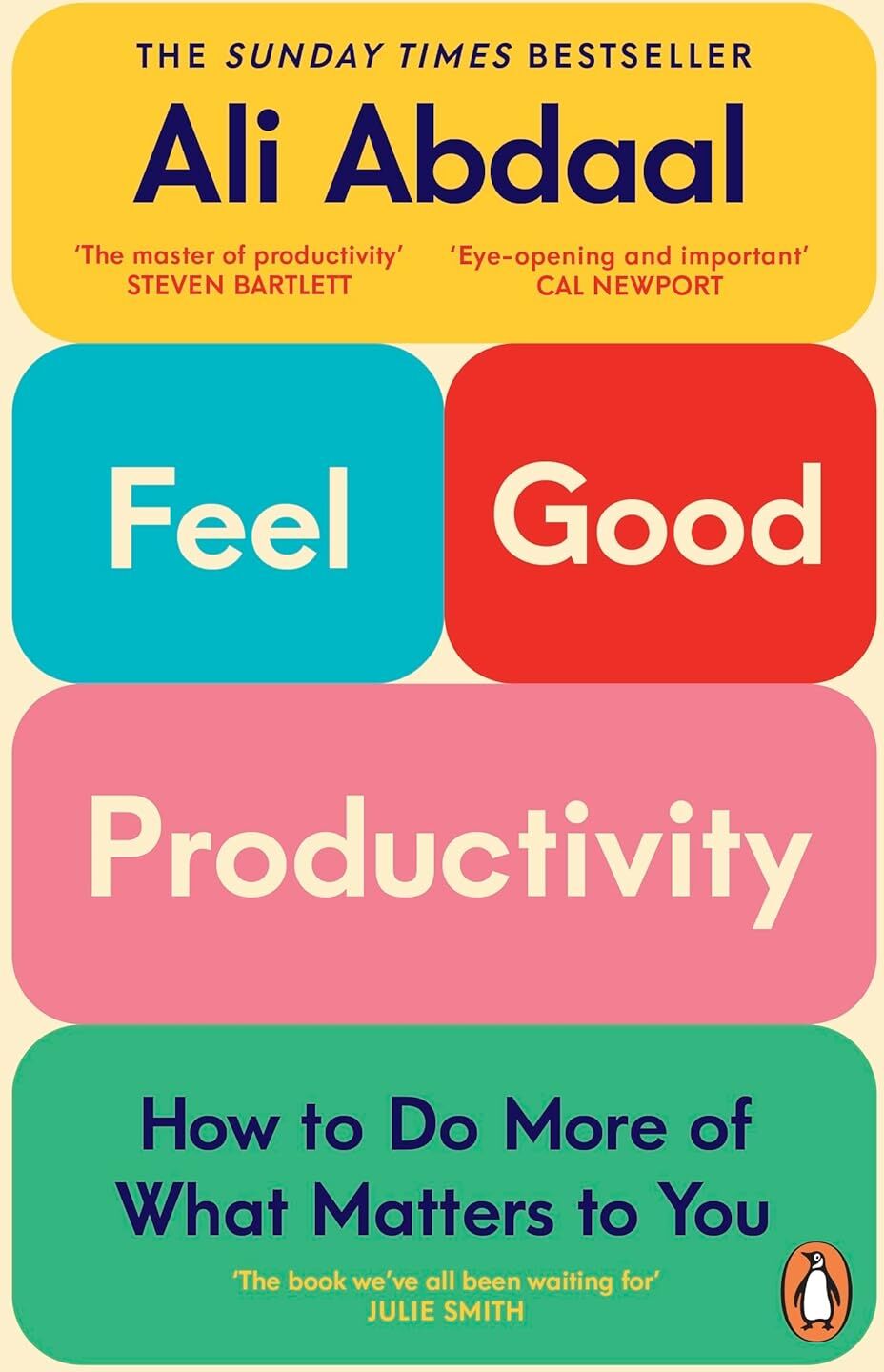
Cornerstone Feel-Good Productivity by Ali Abdaal - Paperback - Bestselling Self-Help & Productivity Book for AdultsDiscover a new approach to productivity with Feel-Good Productivity by Ali Abdaal. This non-fiction paperback book offers a guide to achieving more by finding genuine joy in your work, rather than relying on discipline and willpower. Backed by psychological research and Abdaal's own experience balancing medicine, business, and content creation, the book reframes productivity as a by-product of happiness. It's aimed at anyone feeling stuck in hustle culture and searching for a sustainable, guilt-free way to get things done while protecting their wellbeing and energy. In Feel-Good Productivity, Ali Abdaal dismantles the myth that success requires relentless grind and iron discipline. Instead, he presents a framework built around three 'energisers' — play, power, and people — showing readers how to inject more joy into everyday tasks so that motivation follows naturally rather than being forced. Drawing on peer-reviewed psychology, behaviour, and real-world experience, this book provides a fresh perspective on productivity and happiness.5,99 £*Shipping: 2,99 £Secure redirect to the provider
-
Rupa Publications Deep Focus: How to Achieve Success in a Distracted World by Joe Spacey - Paperback - Self-Help & Productivity Book for AdultsAchieve success in a distracted world with Deep Focus, a practical guide by Joe Spacey. This accessible non-fiction book offers a roadmap back to concentration and purpose, helping professionals, students, entrepreneurs, and anyone battling notification overload. By dismantling the myth of multitasking, Joe Spacey argues that constant task-switching erodes memory, creativity, and decision-making. Instead, he shows readers how to trade scattered busyness for meaningful, focused output through sustained, deliberate attention. Written for those seeking a competitive edge in modern work and life, Deep Focus provides a case for building routines that promote productivity and attention.2,99 £*Shipping: 2,99 £Secure redirect to the provider
-
What is the difference between productivity, efficiency, and profitability?
Productivity refers to the amount of output produced per unit of input, such as time or resources. Efficiency, on the other hand, focuses on how well resources are used to achieve a specific goal or output. Profitability, meanwhile, is a measure of how efficiently a company generates profit relative to its costs and expenses. In essence, productivity is about output per input, efficiency is about resource utilization, and profitability is about the bottom line of a business. **
-
What is the relationship between productivity and economic efficiency?
Productivity and economic efficiency are closely related concepts. Productivity refers to the amount of output produced per unit of input, such as labor or capital. When productivity increases, more output is produced with the same amount of input, leading to greater economic efficiency. Economic efficiency, on the other hand, refers to the optimal allocation of resources to maximize output and minimize waste. Therefore, higher productivity often leads to greater economic efficiency as resources are used more effectively to produce goods and services. Conversely, lower productivity can lead to inefficiencies in resource allocation and reduced overall economic efficiency. **
-
What is the connection between PV inverters, self-consumption, and efficiency?
PV inverters are essential components of solar energy systems, as they convert the direct current (DC) electricity generated by solar panels into alternating current (AC) electricity that can be used in homes or fed into the grid. Self-consumption refers to the practice of using the electricity generated by solar panels on-site, rather than exporting it to the grid. Efficient PV inverters are crucial for maximizing self-consumption, as they ensure that the electricity generated by the solar panels is converted and used effectively within the home. By optimizing the efficiency of PV inverters, more of the solar energy generated can be used on-site, reducing the reliance on grid electricity and maximizing the benefits of solar power for homeowners. **
-
What does growth mean in relation to self-destruction?
Growth in relation to self-destruction means the process of personal development and improvement in the face of destructive behaviors or tendencies. It involves recognizing and addressing self-destructive patterns, and actively working towards positive change and healing. This can include seeking therapy, practicing self-care, and making healthier choices in order to overcome destructive habits and foster personal growth. Ultimately, growth in relation to self-destruction means choosing to move towards a more fulfilling and positive way of living. **
* All prices are inclusive of VAT and, if applicable, plus shipping costs. The offer information is based on the details provided by the respective shop and is updated through automated processes. Real-time updates do not occur, so deviations can occur in individual cases. ** Note: Parts of this content were created by AI.