Buy business-center.eu ?
We are moving the project
business-center.eu .
Are you interested in purchasing the domain
business-center.eu ?
domain@kv-gmbh.de · 0541-91531010
Buy business-center.eu ?
How do you calculate the braking distance, the braking process, and the braking deceleration?
The braking distance can be calculated using the formula: braking distance = (initial velocity^2) / (2 * deceleration), where the deceleration is the rate at which the vehicle slows down. The braking process involves the driver applying the brakes, which causes friction between the brake pads and the wheels, leading to a decrease in the vehicle's speed. The braking deceleration can be calculated by dividing the change in velocity by the time it takes for the vehicle to come to a complete stop. **
How do you calculate the braking time and braking distance?
Braking time and braking distance can be calculated using the formula: Braking distance = (initial velocity^2) / (2 * deceleration) Where initial velocity is the speed of the vehicle before braking, and deceleration is the rate at which the vehicle slows down. Braking time can be calculated by dividing the braking distance by the initial velocity. These calculations are based on the assumption of constant deceleration, and may vary depending on factors such as road conditions and the vehicle's braking system. **

Similar search terms for Braking
Top-Angebote
Products related to Braking:
-
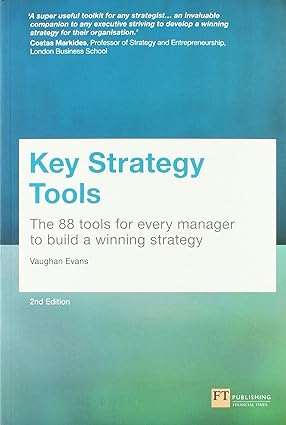
Pearson Key Strategy Tools by Vaughan Evans - 88 Tools for Every Manager to Build a Winning Strategy - Paperback - Business Strategy BookKey Strategy Tools by Vaughan Evans is a comprehensive guide for managers who want to build a winning strategy. Written by strategy consultant Vaughan Evans, this book distils decades of consulting experience into 88 practical tools covering every stage of the strategy process. From market analysis to competitive positioning and implementation, it equips managers, entrepreneurs, and MBA students with a framework for transforming their business into a scalable and valuable asset. The book presents a complete toolkit for strategy development, helping readers to understand why some companies succeed while others struggle, and providing actionable advice on how to achieve success. Published by Pearson, this paperback is a valuable resource for anyone looking to improve their business strategy.2,99 £*Shipping: 2,99 £Secure redirect to the provider
-
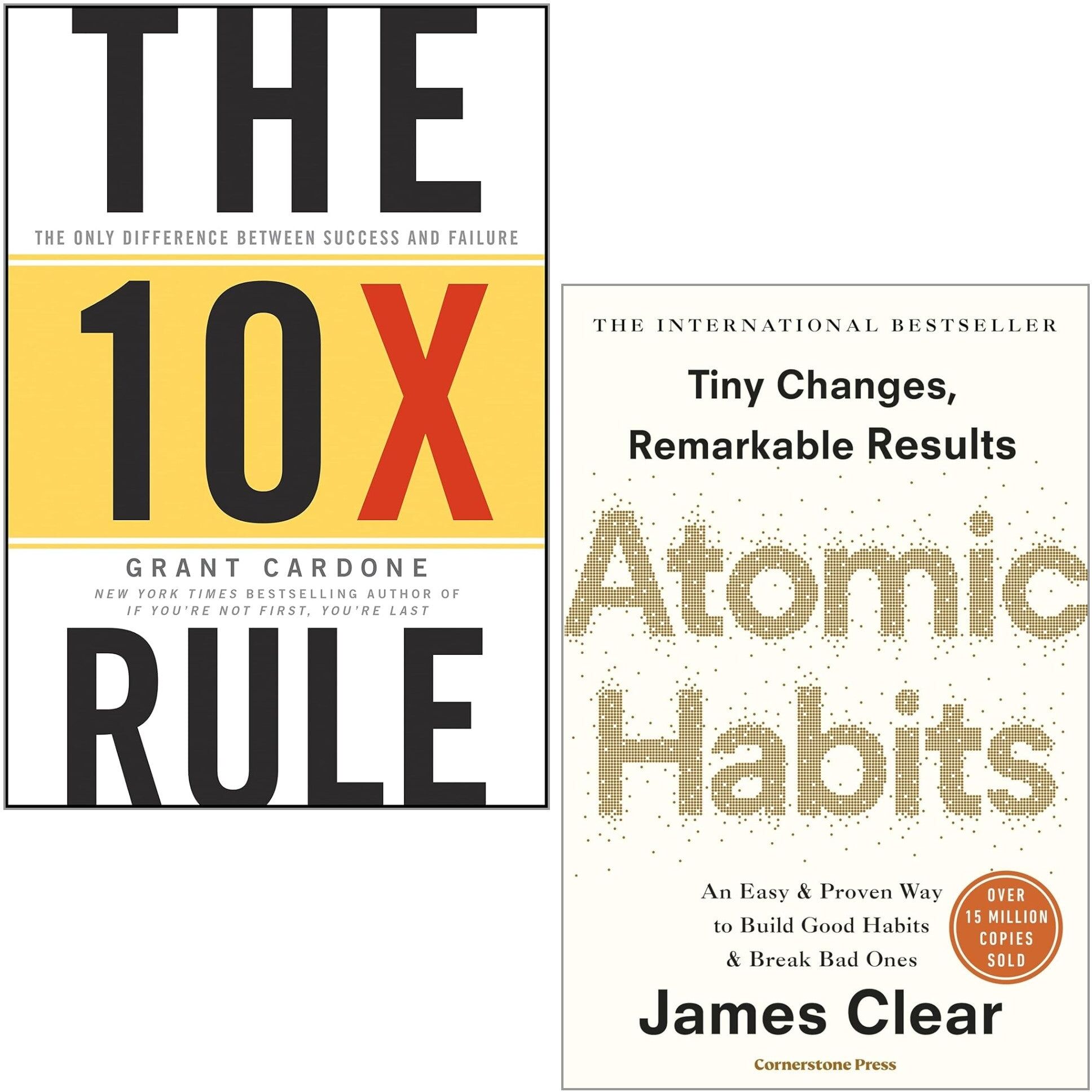
Wiley/Random House Business The 10X Rule [HB] & Atomic Habits [PB] – 2 Books Collection Set by Grant Cardone & James Clear Success, Productivity & Personal Development BooksUpgrade your mindset, habits, and results with The 10X Rule and Atomic Habits – 2 Books Collection Set by Grant Cardone and James Clear. This powerful self-development bundle combines two of the most influential personal growth books of all time. In The 10X Rule, Grant Cardone teaches you how to take massive action, think bigger, and achieve extraordinary success in business and life. Atomic Habits by James Clear reveals how small, consistent habit changes can lead to remarkable long-term improvement. Together, these books provide a complete system for high performance, productivity, goal achievement, and personal transformation—helping you build the habits and mindset needed to succeed. The 10X Rule [Hardcover] Achieve "Massive Action" results and accomplish your business dreams! While most people operate with only three degrees of action-no action, retreat, or normal action-if you're after big goals, you don't want to settle for the ordinary. To reach the next level, you must understand the coveted 4th degree of action. This 4th degree, also know as the 10 X Rule, is that level of action that guarantees companies and individuals realize their goals and dreams. The 10 X Rule unveils the principle of "Massive Action," allowing you to blast through business clichés and risk-aversion while taking concrete steps to reach your dreams. It also demonstrates why people get stuck in the first three actions and how to move into making the 10X Rule a discipline. Find out exactly where to start, what to do, and how to follow up each action you take with more action to achieve Massive Action results. Atomic Habits [Paperback] Transform your life with tiny changes in behaviour, starting now. People think that when you want to change your life, you need to think big. But world-renowned habits expert James Clear has discovered another way. He knows that real change comes from the compound effect of hundreds of small decisions: doing two push-ups a day, waking up five minutes early, or holding a single short phone call. He calls them atomic habits.25,99 £*Shipping: 2,99 £Secure redirect to the provider
-
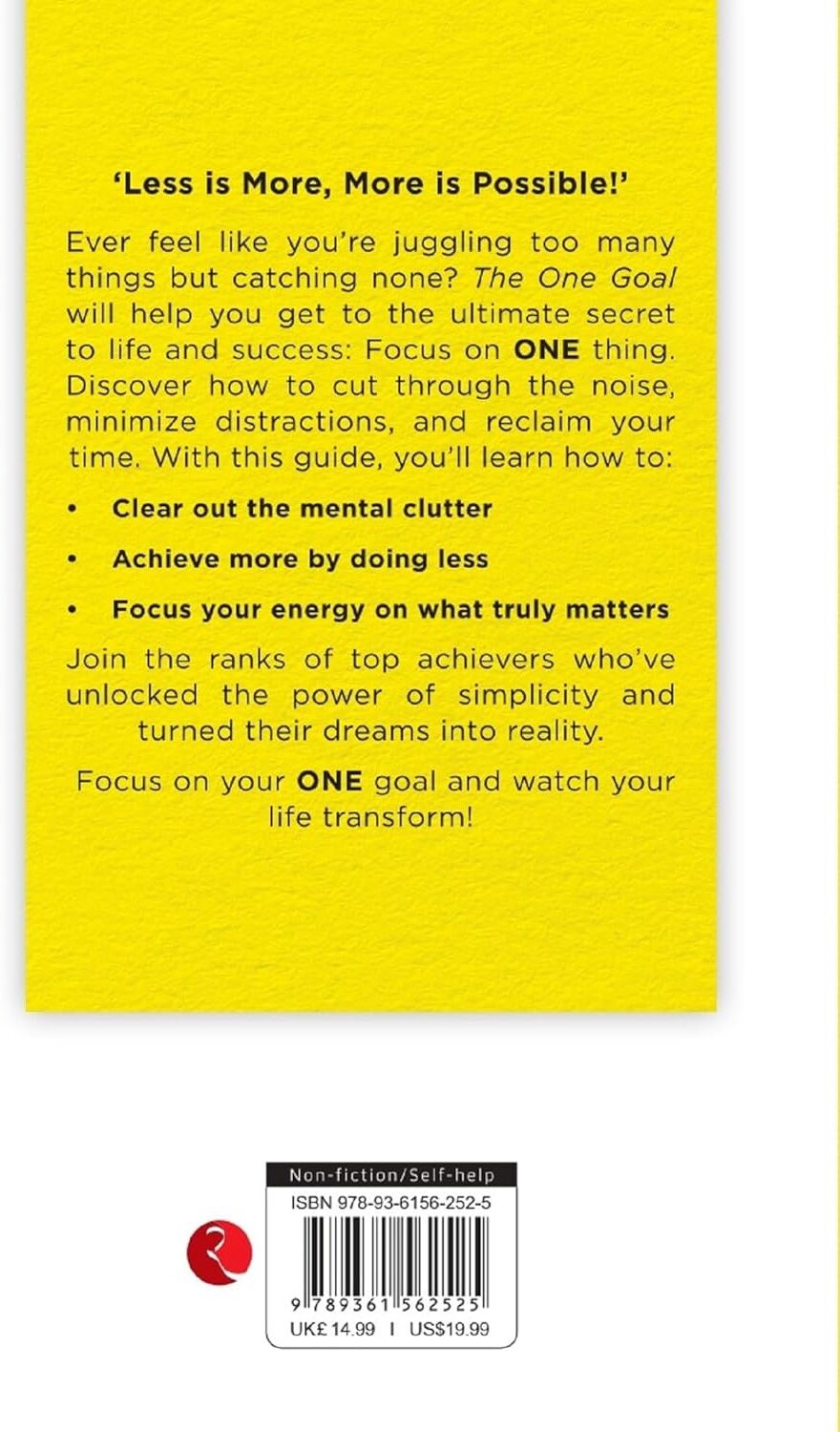
Rupa Publications India The One Goal: The Uncomplicated Guide To Success by Patrick Rayne - Paperback Self-Help Book on Focus, Productivity & Achieving SuccessDiscover a refreshingly direct self-help guide in 'The One Goal: The Uncomplicated Guide To Success' by Patrick Rayne. This paperback strips success down to its essentials, showing readers how to cut through distraction, quieten mental noise, and channel energy toward the one goal that genuinely matters. It's a practical, no-nonsense read for anyone who feels busy but unproductive. The book argues that modern life pushes us toward constant multitasking, and that this scattergun approach is precisely why so many ambitious people stall. Instead of chasing everything at once, the book makes the case for narrowing your focus, not widening it. Published by Rupa Publications India, this book is suitable for adult readers and general readership.2,99 £*Shipping: 2,99 £Secure redirect to the provider
-
Work Wisely, Win Big: Transforming Efforts Into Success by Peter Langston - Rupa Publications - New Paperback - Self-Help & ProductivityTransforming efforts into success is a goal many of us strive for. Work Wisely, Win Big by Peter Langston offers a practical guide to achieving this goal. The book challenges the conventional idea that success is a reward for grinding endlessly and instead argues that sustainable achievement comes from sharper decision-making, better prioritization, and playing to one's natural strengths. Written in an accessible style, this book is aimed at professionals, students, and anyone looking to get more done without burning out. It's a timely read for a world that increasingly values efficiency over exhaustion. Peter Langston lays out a framework for identifying which tasks genuinely move the needle and which are simply busywork. This book is a valuable resource for anyone seeking to work more effectively and achieve their goals.2,99 £*Shipping: 2,99 £Secure redirect to the provider

-
What are the differences between braking to walking speed and braking?
Braking to walking speed typically involves gradually reducing speed until coming to a complete stop, whereas braking refers to the act of slowing down a moving vehicle. When braking to walking speed, the goal is to smoothly decelerate without any sudden stops, while braking may involve more forceful actions to slow down quickly. Additionally, braking to walking speed is often used in situations where a vehicle needs to stop at a precise location, such as at a crosswalk or intersection. **
-
How do you calculate braking time and braking distance in physics?
In physics, braking time and braking distance can be calculated using the equations of motion and the principles of kinematics. The braking time can be calculated using the equation t = v/u, where t is the braking time, v is the final velocity, and u is the initial velocity. The braking distance can be calculated using the equation d = (v^2 - u^2) / (2a), where d is the braking distance and a is the deceleration. These equations take into account the initial and final velocities, as well as the deceleration of the object to determine the braking time and distance. **
-
Is braking a reflex?
Braking can be considered a reflex in certain situations. When a driver reacts to a sudden obstacle or hazard on the road by immediately pressing the brake pedal, it can be seen as a reflexive action. This is because the response is automatic and occurs without conscious thought. However, braking can also be a learned behavior, as drivers are trained to use their brakes in specific situations through practice and experience. Therefore, while braking can be a reflex in some cases, it can also be a learned and intentional action. **
-
Can economic efficiency and productivity develop mutually?
Yes, economic efficiency and productivity can develop mutually. When businesses and industries become more efficient in their operations, they can produce more output with the same amount of input, leading to increased productivity. Similarly, when productivity increases, it can drive economic efficiency by reducing waste and improving resource allocation. Therefore, as businesses and industries focus on improving efficiency and productivity, they can reinforce and support each other's development. **

What is the difference between a full braking and an emergency braking?
Full braking refers to applying the brakes with maximum force in a controlled manner to slow down or stop the vehicle. This can be done in response to normal traffic conditions or when approaching a stop sign or traffic light. On the other hand, emergency braking is a sudden and forceful application of the brakes in response to an unexpected hazard or danger, such as a pedestrian stepping into the road or a vehicle suddenly stopping in front. Emergency braking is typically done to avoid a collision and requires quick reflexes and a strong, immediate response from the driver. **
What is the formula for braking acceleration and braking time in physics?
The formula for braking acceleration is given by \( a = \frac{v_f - v_i}{t} \), where \( a \) is the braking acceleration, \( v_f \) is the final velocity, \( v_i \) is the initial velocity, and \( t \) is the time taken to come to a stop. The formula for braking time can be calculated using the equation \( t = \frac{v_f - v_i}{a} \), where \( t \) is the braking time. These formulas are used to calculate the rate at which an object slows down when braking. **
Top-Angebote
Products related to Braking:
-
Pan Make Brilliant Work: Lessons on Creativity, Innovation and Success by Rod Judkins - Paperback - Self-Help/Business Creativity Guide, Author ofMake Brilliant Work is an inspiring guide by Rod Judkins, drawing on the real-life stories of visionaries from Frida Kahlo to Steve Jobs. This paperback book reveals the methods and mindsets that turn ordinary effort into extraordinary results. Judkins proves that talent alone never guaranteed success — persistence, risk-taking and original thinking did. A motivating read for anyone wanting to unlock their creative potential at work or in life. The book profiles figures who failed at school, were told they lacked talent, or were fired more than once, yet went on to achieve great things. Written by Rod Judkins, published by Pan Macmillan, this book is a reassuring truth: you don't have to be naturally brilliant to produce brilliant work.2,99 £*Shipping: 2,99 £Secure redirect to the provider
-
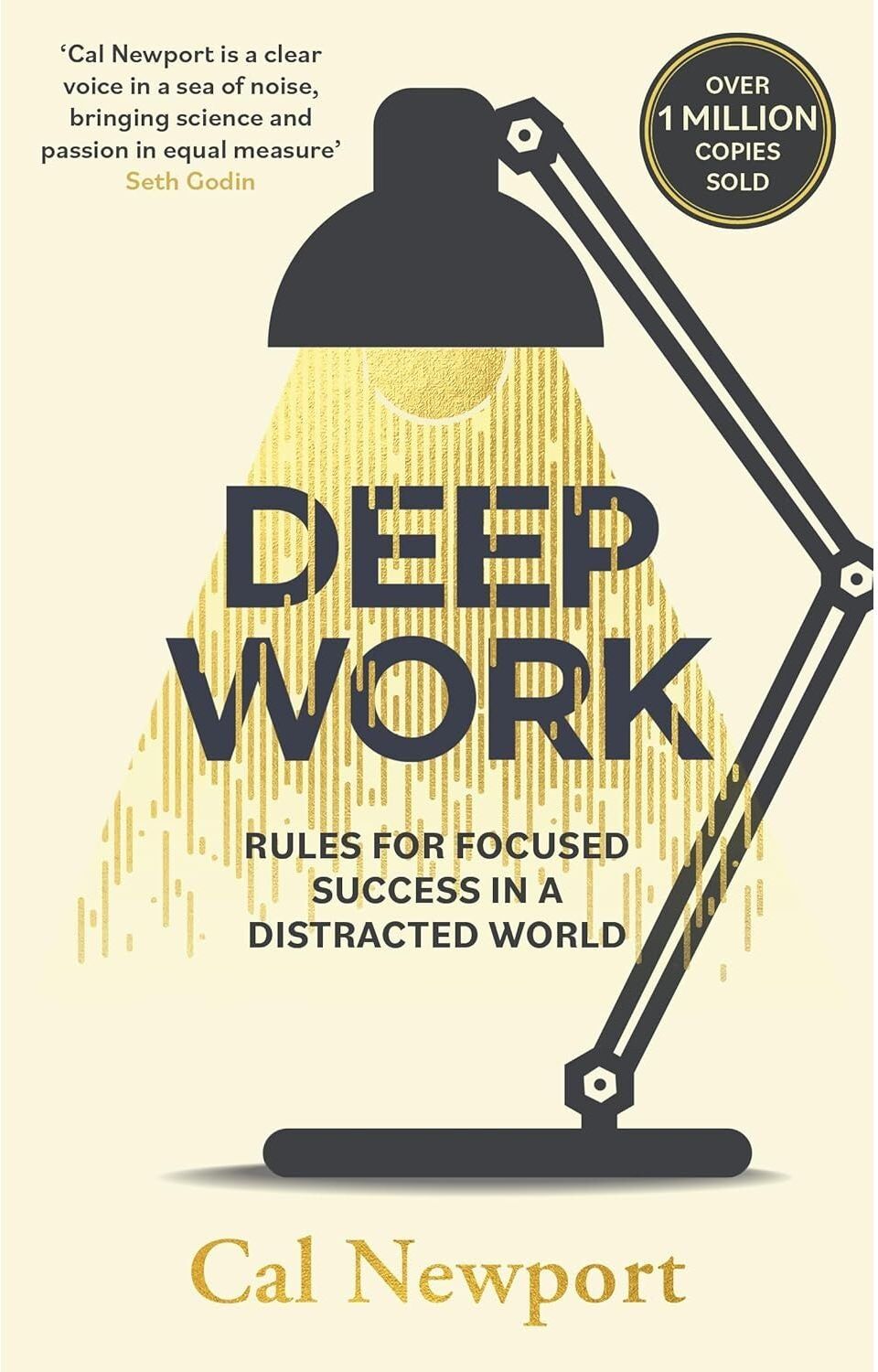
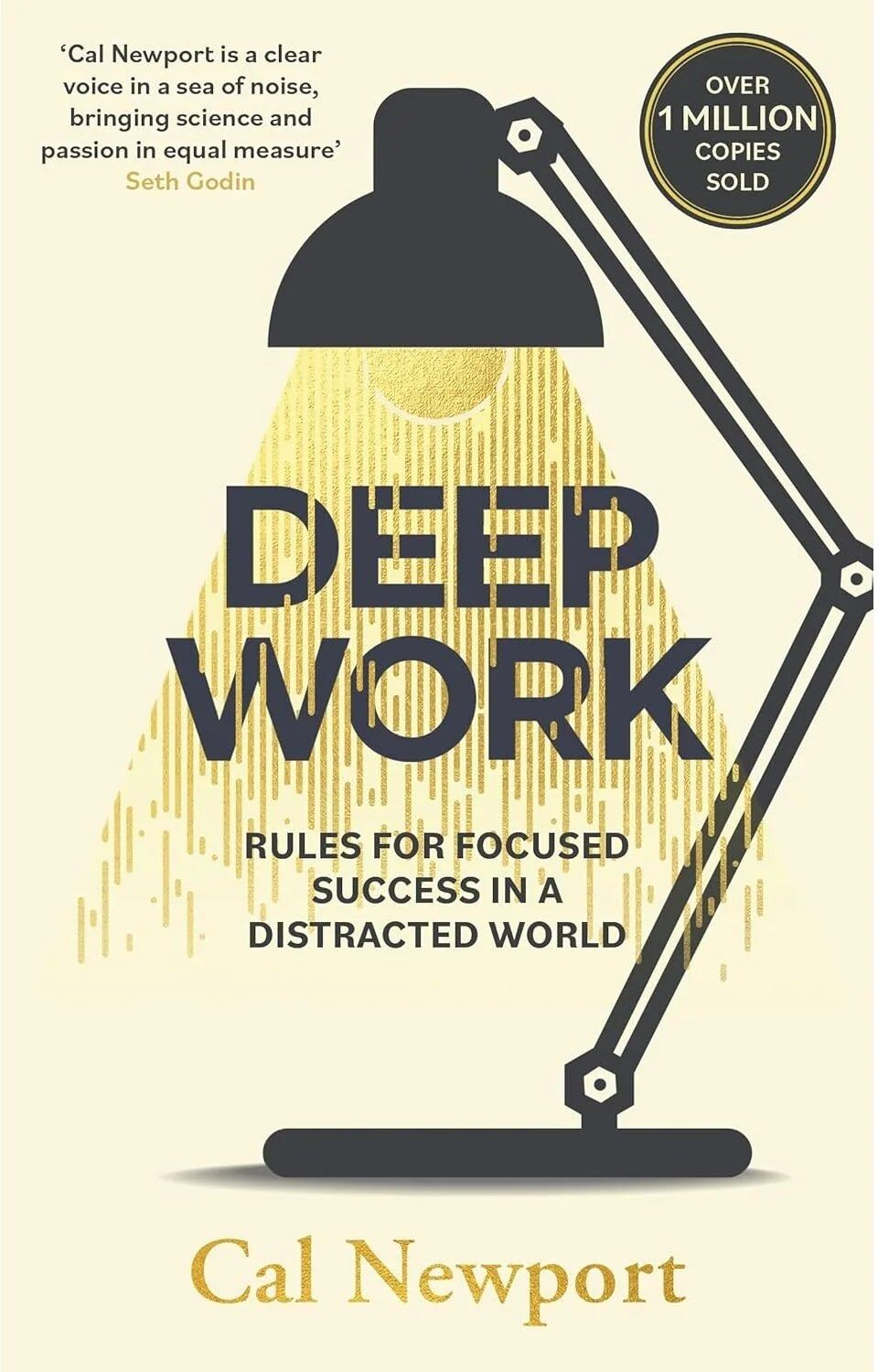
Piatkus Deep Work – Rules for Focused Success in a Distracted World by Cal Newport Productivity, Focus & Career Success BookIn a world full of distractions, the ability to focus deeply is becoming increasingly rare—and increasingly valuable. In Deep Work: Rules for Focused Success in a Distracted World, bestselling author and productivity expert Cal Newport explains why deep, concentrated work is the key to mastering complex skills, producing high-quality results, and standing out in your career. Drawing on neuroscience, psychology, and real-world examples, Newport shows how to eliminate distractions, train your focus, and work with intense concentration. The book combines compelling theory with practical strategies, helping readers build habits that support sustained attention and meaningful productivity in both professional and personal life. What You’ll Learn: Why deep work is essential for success in the modern economy How shallow work undermines productivity and focus Practical rules for building deep work habits Techniques to minimize distractions and digital overload How to produce better results in less time Perfect for professionals, students, creatives, and entrepreneurs, Deep Work is a must-read guide to achieving focus, efficiency, and long-term career success.7,99 £*Shipping: 2,99 £Secure redirect to the provider
-
Pearson Key Strategy Tools by Vaughan Evans - 88 Tools for Every Manager to Build a Winning Strategy - Paperback - Business Strategy BookKey Strategy Tools by Vaughan Evans is a comprehensive guide for managers who want to build a winning strategy. Written by strategy consultant Vaughan Evans, this book distils decades of consulting experience into 88 practical tools covering every stage of the strategy process. From market analysis to competitive positioning and implementation, it equips managers, entrepreneurs, and MBA students with a framework for transforming their business into a scalable and valuable asset. The book presents a complete toolkit for strategy development, helping readers to understand why some companies succeed while others struggle, and providing actionable advice on how to achieve success. Published by Pearson, this paperback is a valuable resource for anyone looking to improve their business strategy.2,99 £*Shipping: 2,99 £Secure redirect to the provider
-
Wiley/Random House Business The 10X Rule [HB] & Atomic Habits [PB] – 2 Books Collection Set by Grant Cardone & James Clear Success, Productivity & Personal Development BooksUpgrade your mindset, habits, and results with The 10X Rule and Atomic Habits – 2 Books Collection Set by Grant Cardone and James Clear. This powerful self-development bundle combines two of the most influential personal growth books of all time. In The 10X Rule, Grant Cardone teaches you how to take massive action, think bigger, and achieve extraordinary success in business and life. Atomic Habits by James Clear reveals how small, consistent habit changes can lead to remarkable long-term improvement. Together, these books provide a complete system for high performance, productivity, goal achievement, and personal transformation—helping you build the habits and mindset needed to succeed. The 10X Rule [Hardcover] Achieve "Massive Action" results and accomplish your business dreams! While most people operate with only three degrees of action-no action, retreat, or normal action-if you're after big goals, you don't want to settle for the ordinary. To reach the next level, you must understand the coveted 4th degree of action. This 4th degree, also know as the 10 X Rule, is that level of action that guarantees companies and individuals realize their goals and dreams. The 10 X Rule unveils the principle of "Massive Action," allowing you to blast through business clichés and risk-aversion while taking concrete steps to reach your dreams. It also demonstrates why people get stuck in the first three actions and how to move into making the 10X Rule a discipline. Find out exactly where to start, what to do, and how to follow up each action you take with more action to achieve Massive Action results. Atomic Habits [Paperback] Transform your life with tiny changes in behaviour, starting now. People think that when you want to change your life, you need to think big. But world-renowned habits expert James Clear has discovered another way. He knows that real change comes from the compound effect of hundreds of small decisions: doing two push-ups a day, waking up five minutes early, or holding a single short phone call. He calls them atomic habits.25,99 £*Shipping: 2,99 £Secure redirect to the provider
-
How do you calculate the braking distance, the braking process, and the braking deceleration?
The braking distance can be calculated using the formula: braking distance = (initial velocity^2) / (2 * deceleration), where the deceleration is the rate at which the vehicle slows down. The braking process involves the driver applying the brakes, which causes friction between the brake pads and the wheels, leading to a decrease in the vehicle's speed. The braking deceleration can be calculated by dividing the change in velocity by the time it takes for the vehicle to come to a complete stop. **
-
How do you calculate the braking time and braking distance?
Braking time and braking distance can be calculated using the formula: Braking distance = (initial velocity^2) / (2 * deceleration) Where initial velocity is the speed of the vehicle before braking, and deceleration is the rate at which the vehicle slows down. Braking time can be calculated by dividing the braking distance by the initial velocity. These calculations are based on the assumption of constant deceleration, and may vary depending on factors such as road conditions and the vehicle's braking system. **
-
What are the differences between braking to walking speed and braking?
Braking to walking speed typically involves gradually reducing speed until coming to a complete stop, whereas braking refers to the act of slowing down a moving vehicle. When braking to walking speed, the goal is to smoothly decelerate without any sudden stops, while braking may involve more forceful actions to slow down quickly. Additionally, braking to walking speed is often used in situations where a vehicle needs to stop at a precise location, such as at a crosswalk or intersection. **
-
How do you calculate braking time and braking distance in physics?
In physics, braking time and braking distance can be calculated using the equations of motion and the principles of kinematics. The braking time can be calculated using the equation t = v/u, where t is the braking time, v is the final velocity, and u is the initial velocity. The braking distance can be calculated using the equation d = (v^2 - u^2) / (2a), where d is the braking distance and a is the deceleration. These equations take into account the initial and final velocities, as well as the deceleration of the object to determine the braking time and distance. **
Similar search terms for Braking
-
Rupa Publications India The One Goal: The Uncomplicated Guide To Success by Patrick Rayne - Paperback Self-Help Book on Focus, Productivity & Achieving SuccessDiscover a refreshingly direct self-help guide in 'The One Goal: The Uncomplicated Guide To Success' by Patrick Rayne. This paperback strips success down to its essentials, showing readers how to cut through distraction, quieten mental noise, and channel energy toward the one goal that genuinely matters. It's a practical, no-nonsense read for anyone who feels busy but unproductive. The book argues that modern life pushes us toward constant multitasking, and that this scattergun approach is precisely why so many ambitious people stall. Instead of chasing everything at once, the book makes the case for narrowing your focus, not widening it. Published by Rupa Publications India, this book is suitable for adult readers and general readership.2,99 £*Shipping: 2,99 £Secure redirect to the provider
-
Work Wisely, Win Big: Transforming Efforts Into Success by Peter Langston - Rupa Publications - New Paperback - Self-Help & ProductivityTransforming efforts into success is a goal many of us strive for. Work Wisely, Win Big by Peter Langston offers a practical guide to achieving this goal. The book challenges the conventional idea that success is a reward for grinding endlessly and instead argues that sustainable achievement comes from sharper decision-making, better prioritization, and playing to one's natural strengths. Written in an accessible style, this book is aimed at professionals, students, and anyone looking to get more done without burning out. It's a timely read for a world that increasingly values efficiency over exhaustion. Peter Langston lays out a framework for identifying which tasks genuinely move the needle and which are simply busywork. This book is a valuable resource for anyone seeking to work more effectively and achieve their goals.2,99 £*Shipping: 2,99 £Secure redirect to the provider
-
HarperCollins Creative Confidence by David Kelley & Tom Kelley - IDEO Design Thinking Guide - Paperback - Business & Innovation Non Fiction BookDevelop your creative potential with this paperback edition of 'Creative Confidence' by David Kelley. The book, published by HarperCollins, argues that creativity is a skill anyone can build, not a rare gift reserved for a few. Drawing on decades of experience helping companies innovate, the authors share practical tools for turning doubt into confident action. This book sets out to demolish the myth that creativity belongs only to 'creative types' and offers real-world advice for anyone looking to boost their creative skills.4,99 £*Shipping: 2,99 £Secure redirect to the provider
-
Piatkus Deep Work by Cal Newport - Paperback - Rules for Focused Success in a Distracted World - Productivity & Focus Non Fiction BookDiscover the power of focused work with Cal Newport's influential guide, Deep Work: Rules for Focused Success in a Distracted World. This new paperback edition explores why the ability to concentrate deeply, without distraction, is becoming a rare and valuable skill in today's economy. Written for professionals, students, entrepreneurs, and academics, the book combines research-backed argument with practical routines for building sustained concentration and doing meaningful work. Cal Newport structures the book into two clear parts, first making the case for why deep work matters, and then providing practical advice for achieving it. This edition is published by Piatkus and has an ISBN of 9780349411903.7,99 £*Shipping: 2,99 £Secure redirect to the provider
-
Is braking a reflex?
Braking can be considered a reflex in certain situations. When a driver reacts to a sudden obstacle or hazard on the road by immediately pressing the brake pedal, it can be seen as a reflexive action. This is because the response is automatic and occurs without conscious thought. However, braking can also be a learned behavior, as drivers are trained to use their brakes in specific situations through practice and experience. Therefore, while braking can be a reflex in some cases, it can also be a learned and intentional action. **
-
Can economic efficiency and productivity develop mutually?
Yes, economic efficiency and productivity can develop mutually. When businesses and industries become more efficient in their operations, they can produce more output with the same amount of input, leading to increased productivity. Similarly, when productivity increases, it can drive economic efficiency by reducing waste and improving resource allocation. Therefore, as businesses and industries focus on improving efficiency and productivity, they can reinforce and support each other's development. **
-
What is the difference between a full braking and an emergency braking?
Full braking refers to applying the brakes with maximum force in a controlled manner to slow down or stop the vehicle. This can be done in response to normal traffic conditions or when approaching a stop sign or traffic light. On the other hand, emergency braking is a sudden and forceful application of the brakes in response to an unexpected hazard or danger, such as a pedestrian stepping into the road or a vehicle suddenly stopping in front. Emergency braking is typically done to avoid a collision and requires quick reflexes and a strong, immediate response from the driver. **
-
What is the formula for braking acceleration and braking time in physics?
The formula for braking acceleration is given by \( a = \frac{v_f - v_i}{t} \), where \( a \) is the braking acceleration, \( v_f \) is the final velocity, \( v_i \) is the initial velocity, and \( t \) is the time taken to come to a stop. The formula for braking time can be calculated using the equation \( t = \frac{v_f - v_i}{a} \), where \( t \) is the braking time. These formulas are used to calculate the rate at which an object slows down when braking. **
* All prices are inclusive of VAT and, if applicable, plus shipping costs. The offer information is based on the details provided by the respective shop and is updated through automated processes. Real-time updates do not occur, so deviations can occur in individual cases. ** Note: Parts of this content were created by AI.