Buy business-center.eu ?
We are moving the project
business-center.eu .
Are you interested in purchasing the domain
business-center.eu ?
domain@kv-gmbh.de · 0541-91531010
Buy business-center.eu ?
Was the economic policy of the NSDAP a success?
The economic policy of the NSDAP, led by Adolf Hitler, can be seen as a short-term success in terms of reducing unemployment and stimulating economic growth through public works projects and rearmament. However, the long-term consequences of the policy, such as hyperinflation and the devastation of World War II, ultimately led to economic ruin for Germany. Additionally, the policy was built on a foundation of militarism and aggression, which ultimately led to the downfall of the Nazi regime. Therefore, while the economic policy initially appeared successful, it ultimately led to catastrophic consequences for Germany and the world. **
What is the difference between process policy, structural policy, and regulatory policy?
Process policy refers to the rules and procedures that govern how tasks are carried out within an organization. Structural policy pertains to the overall design and organization of an institution, including its hierarchy, reporting relationships, and division of responsibilities. Regulatory policy, on the other hand, involves the establishment and enforcement of rules and standards by a governing body to ensure compliance and protect the public interest. Each type of policy serves a distinct purpose in guiding behavior and decision-making within an organization or society. **


Similar search terms for Policy
Top-Angebote
Products related to Policy:
-
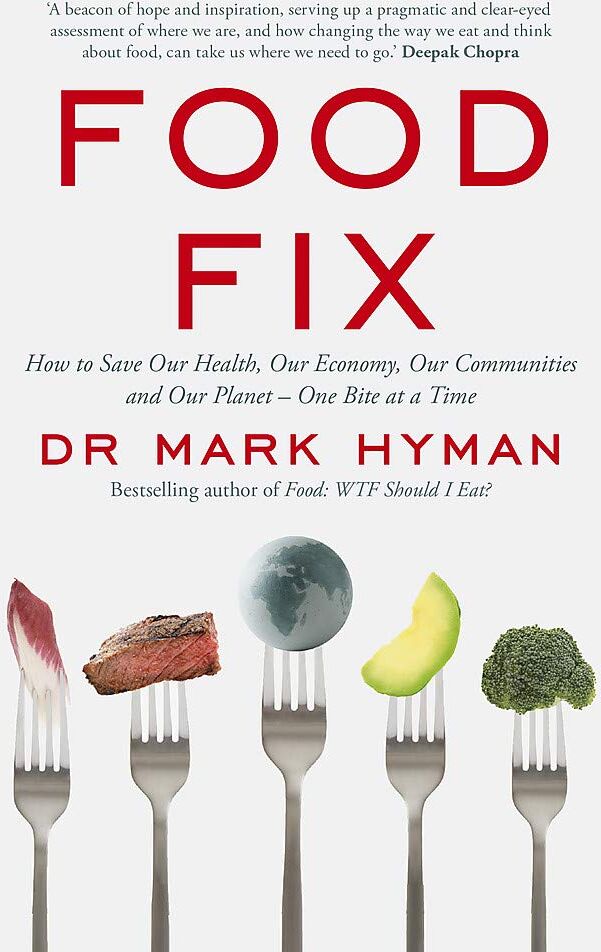
Yellow Kite Food Fix by Mark Hyman MD - Paperback - Food Policy, Health & Environment Non-Fiction BookFood Fix by Mark Hyman is a non-fiction paperback book that explores the connection between food and the crises facing society. Written by New York Times best-selling author and physician Mark Hyman, this book argues that fixing our broken food system could have a positive impact on our health, local economies, communities, and the planet. In Food Fix, Hyman lays bare how industrial food and agriculture systems are shaped by powerful financial interests, driving issues such as obesity and type 2 diabetes. This book is essential reading for anyone concerned about the intersection of food, health, and the environment.3,49 £*Shipping: 2,99 £Secure redirect to the provider
-
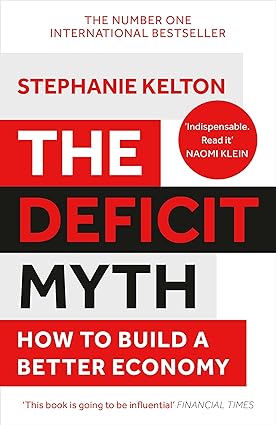
The Deficit Myth by Stephanie Kelton - Modern Monetary Theory - Paperback - John Murray Press - Economics & Public Policy BookThe Deficit Myth by Stephanie Kelton is a thought-provoking book that rethinks how modern economies work. Drawing on Modern Monetary Theory (MMT), Kelton challenges the conventional wisdom that government deficits are inherently dangerous, arguing instead that they can be powerful tools for funding public services and infrastructure. This paperback edition is a clear and accessible explanation of public finance and economic policy, making it essential reading for anyone interested in these topics. About the book, economist Stephanie Kelton dismantles the idea that government deficits are a looming disaster, showing that for countries that issue their own currency, the true constraint on spending is not a shortage of money but a shortage of political will to invest in the things that matter.5,99 £*Shipping: 2,99 £Secure redirect to the provider
-
Pan Make Brilliant Work: Lessons on Creativity, Innovation and Success by Rod Judkins - Paperback - Self-Help/Business Creativity Guide, Author ofMake Brilliant Work is an inspiring guide by Rod Judkins, drawing on the real-life stories of visionaries from Frida Kahlo to Steve Jobs. This paperback book reveals the methods and mindsets that turn ordinary effort into extraordinary results. Judkins proves that talent alone never guaranteed success — persistence, risk-taking and original thinking did. A motivating read for anyone wanting to unlock their creative potential at work or in life. The book profiles figures who failed at school, were told they lacked talent, or were fired more than once, yet went on to achieve great things. Written by Rod Judkins, published by Pan Macmillan, this book is a reassuring truth: you don't have to be naturally brilliant to produce brilliant work.2,99 £*Shipping: 2,99 £Secure redirect to the provider
-
Yellow Kite Dr Mark Hyman 2 Books Collection Set (The Pegan Diet & Food Fix) - Paperback Non Fiction Nutrition & Food Policy Set - NewThis collection of two books by Dr Mark Hyman brings together his influential works on food and health: The Pegan Diet and Food Fix. Written by a New York Times bestselling functional-medicine physician, these titles combine practical nutrition guidance with a hard-hitting look at the politics of food. The Pegan Diet blends the best principles of the paleo and vegan approaches into 21 practical rules, featuring 30 recipes and clear infographics. Food Fix offers a complete picture of how to eat well personally while understanding the wider forces shaping the global food system. The books are written in a clear and accessible style, making them ideal for health-conscious readers and anyone curious about food policy. The paperback set is a brand-new edition, published by Yellow Kite.12,99 £*Shipping: 2,99 £Secure redirect to the provider


-
What is the difference between process policy, structural policy, and order policy?
Process policy refers to the rules and procedures that govern how decisions are made and implemented within an organization. Structural policy, on the other hand, pertains to the framework and organization of the institution, including its hierarchy, departments, and reporting structure. Order policy focuses on the sequence and prioritization of tasks and activities within the organization, ensuring that work is carried out efficiently and effectively. Each type of policy plays a crucial role in shaping the overall functioning and success of an organization. **
-
Can economic efficiency and productivity develop mutually?
Yes, economic efficiency and productivity can develop mutually. When businesses and industries become more efficient in their operations, they can produce more output with the same amount of input, leading to increased productivity. Similarly, when productivity increases, it can drive economic efficiency by reducing waste and improving resource allocation. Therefore, as businesses and industries focus on improving efficiency and productivity, they can reinforce and support each other's development. **
-
Could social policy have been maintained while still achieving economic growth?
Yes, social policy could have been maintained while still achieving economic growth. By implementing policies that support both social welfare and economic development, such as investing in education and healthcare, providing social safety nets, and promoting inclusive economic growth, a balance can be achieved. This approach can lead to a more equitable distribution of resources and opportunities, ultimately benefiting both the society and the economy. It is possible to prioritize social policy while also fostering economic growth through thoughtful and strategic policymaking. **
-
What is the difference between efficiency and productivity?
Efficiency refers to how well resources are utilized to achieve a specific goal or output, while productivity measures the output or results generated from a specific amount of input or resources. Efficiency focuses on minimizing waste and maximizing output with the resources available, while productivity is a measure of how much output is produced relative to the input used. In essence, efficiency is about doing things right, while productivity is about doing the right things. **
What are the connections between efficiency and productivity?
Efficiency and productivity are closely connected in that efficiency refers to the ability to accomplish a task with minimal waste, effort, or cost, while productivity refers to the rate at which goods or services are produced. When a process or system is efficient, it can lead to increased productivity because it allows for more output to be generated with the same amount of input. Conversely, when productivity is high, it often indicates that the resources and processes are being used efficiently. Therefore, improving efficiency can lead to increased productivity, and vice versa, as they both contribute to the overall effectiveness of a business or organization. **
Does increasing productivity lead to higher economic efficiency?
Yes, increasing productivity can lead to higher economic efficiency. When a company or economy can produce more output with the same input of resources, it can lead to lower production costs and higher profits. This can also lead to lower prices for consumers, which can increase overall economic welfare. Additionally, higher productivity can lead to increased competitiveness in the global market, which can further contribute to economic efficiency. **
Top-Angebote
Products related to Policy:
-
ClearBags "#10 Policy Premium Envelopes, Natural 4 1/8"" x 9 1/2"" 50 pack"Natural, Premium Opaque Envelopes feature a smooth and uniform print surface delivers rich and vibrant colors. Natural, Premium Opaque Envelopes provide uncompromising quality and excellent value. FSC and SFI-Certified and endorsed by the Rainforest...27,56 $*Shipping: 0,00 $Secure redirect to the provider
-
ClearBags "#10 Policy Premium Envelopes, White 4 1/8"" x 9 1/2"" 50 pack"White, Premium Opaque Envelopes feature a stellar brightness and balanced white shade. The smooth and uniform print surface delivers rich and vibrant colors. White, Premium Opaque Envelopes provide uncompromising quality and excellent value....24,79 $*Shipping: 0,00 $Secure redirect to the provider
-
Yellow Kite Food Fix by Mark Hyman MD - Paperback - Food Policy, Health & Environment Non-Fiction BookFood Fix by Mark Hyman is a non-fiction paperback book that explores the connection between food and the crises facing society. Written by New York Times best-selling author and physician Mark Hyman, this book argues that fixing our broken food system could have a positive impact on our health, local economies, communities, and the planet. In Food Fix, Hyman lays bare how industrial food and agriculture systems are shaped by powerful financial interests, driving issues such as obesity and type 2 diabetes. This book is essential reading for anyone concerned about the intersection of food, health, and the environment.3,49 £*Shipping: 2,99 £Secure redirect to the provider
-
The Deficit Myth by Stephanie Kelton - Modern Monetary Theory - Paperback - John Murray Press - Economics & Public Policy BookThe Deficit Myth by Stephanie Kelton is a thought-provoking book that rethinks how modern economies work. Drawing on Modern Monetary Theory (MMT), Kelton challenges the conventional wisdom that government deficits are inherently dangerous, arguing instead that they can be powerful tools for funding public services and infrastructure. This paperback edition is a clear and accessible explanation of public finance and economic policy, making it essential reading for anyone interested in these topics. About the book, economist Stephanie Kelton dismantles the idea that government deficits are a looming disaster, showing that for countries that issue their own currency, the true constraint on spending is not a shortage of money but a shortage of political will to invest in the things that matter.5,99 £*Shipping: 2,99 £Secure redirect to the provider
-
Was the economic policy of the NSDAP a success?
The economic policy of the NSDAP, led by Adolf Hitler, can be seen as a short-term success in terms of reducing unemployment and stimulating economic growth through public works projects and rearmament. However, the long-term consequences of the policy, such as hyperinflation and the devastation of World War II, ultimately led to economic ruin for Germany. Additionally, the policy was built on a foundation of militarism and aggression, which ultimately led to the downfall of the Nazi regime. Therefore, while the economic policy initially appeared successful, it ultimately led to catastrophic consequences for Germany and the world. **
-
What is the difference between process policy, structural policy, and regulatory policy?
Process policy refers to the rules and procedures that govern how tasks are carried out within an organization. Structural policy pertains to the overall design and organization of an institution, including its hierarchy, reporting relationships, and division of responsibilities. Regulatory policy, on the other hand, involves the establishment and enforcement of rules and standards by a governing body to ensure compliance and protect the public interest. Each type of policy serves a distinct purpose in guiding behavior and decision-making within an organization or society. **
-
What is the difference between process policy, structural policy, and order policy?
Process policy refers to the rules and procedures that govern how decisions are made and implemented within an organization. Structural policy, on the other hand, pertains to the framework and organization of the institution, including its hierarchy, departments, and reporting structure. Order policy focuses on the sequence and prioritization of tasks and activities within the organization, ensuring that work is carried out efficiently and effectively. Each type of policy plays a crucial role in shaping the overall functioning and success of an organization. **
-
Can economic efficiency and productivity develop mutually?
Yes, economic efficiency and productivity can develop mutually. When businesses and industries become more efficient in their operations, they can produce more output with the same amount of input, leading to increased productivity. Similarly, when productivity increases, it can drive economic efficiency by reducing waste and improving resource allocation. Therefore, as businesses and industries focus on improving efficiency and productivity, they can reinforce and support each other's development. **
Similar search terms for Policy
-
Pan Make Brilliant Work: Lessons on Creativity, Innovation and Success by Rod Judkins - Paperback - Self-Help/Business Creativity Guide, Author ofMake Brilliant Work is an inspiring guide by Rod Judkins, drawing on the real-life stories of visionaries from Frida Kahlo to Steve Jobs. This paperback book reveals the methods and mindsets that turn ordinary effort into extraordinary results. Judkins proves that talent alone never guaranteed success — persistence, risk-taking and original thinking did. A motivating read for anyone wanting to unlock their creative potential at work or in life. The book profiles figures who failed at school, were told they lacked talent, or were fired more than once, yet went on to achieve great things. Written by Rod Judkins, published by Pan Macmillan, this book is a reassuring truth: you don't have to be naturally brilliant to produce brilliant work.2,99 £*Shipping: 2,99 £Secure redirect to the provider
-
Yellow Kite Dr Mark Hyman 2 Books Collection Set (The Pegan Diet & Food Fix) - Paperback Non Fiction Nutrition & Food Policy Set - NewThis collection of two books by Dr Mark Hyman brings together his influential works on food and health: The Pegan Diet and Food Fix. Written by a New York Times bestselling functional-medicine physician, these titles combine practical nutrition guidance with a hard-hitting look at the politics of food. The Pegan Diet blends the best principles of the paleo and vegan approaches into 21 practical rules, featuring 30 recipes and clear infographics. Food Fix offers a complete picture of how to eat well personally while understanding the wider forces shaping the global food system. The books are written in a clear and accessible style, making them ideal for health-conscious readers and anyone curious about food policy. The paperback set is a brand-new edition, published by Yellow Kite.12,99 £*Shipping: 2,99 £Secure redirect to the provider
-
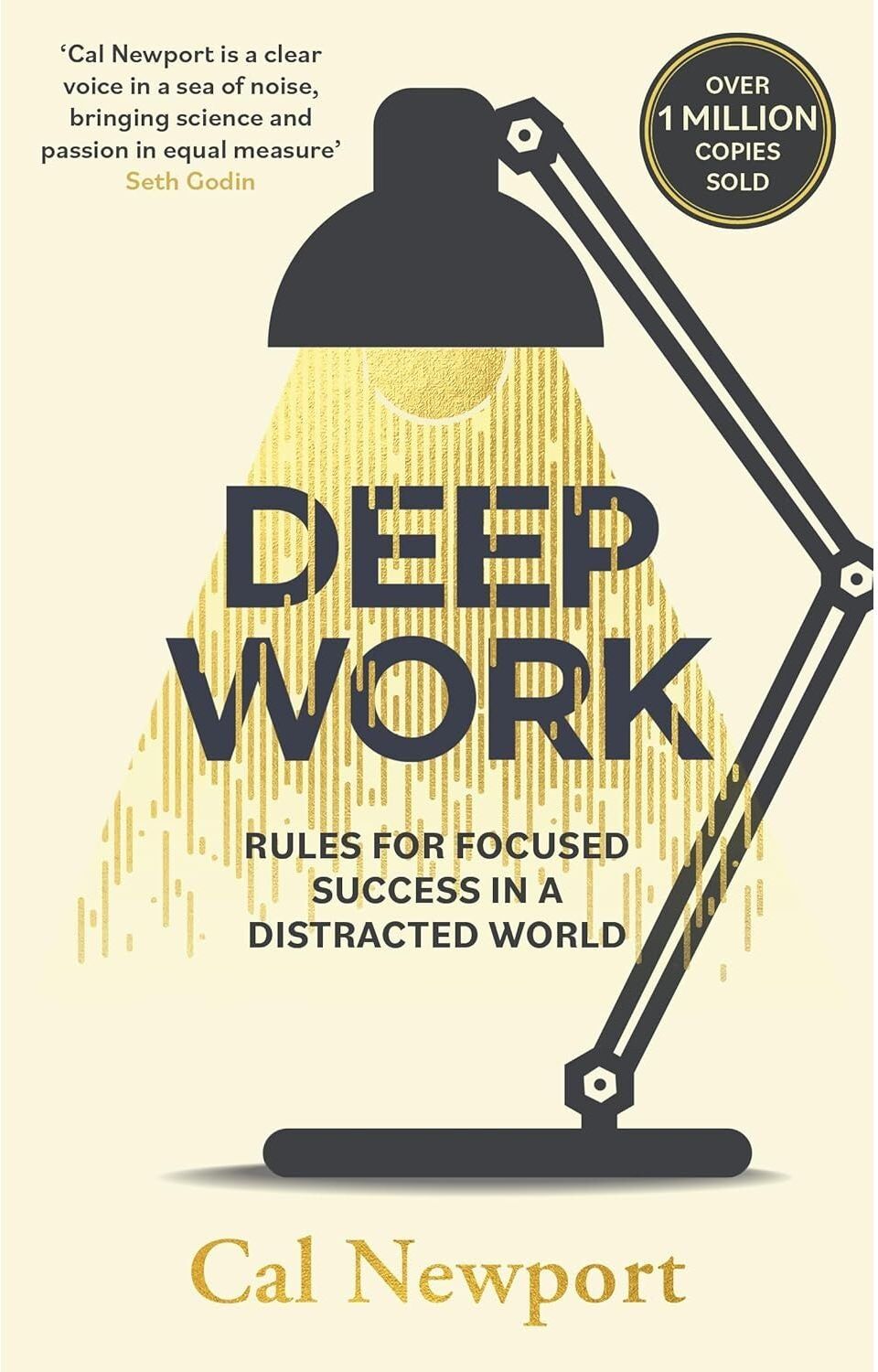
Piatkus Deep Work – Rules for Focused Success in a Distracted World by Cal Newport Productivity, Focus & Career Success BookIn a world full of distractions, the ability to focus deeply is becoming increasingly rare—and increasingly valuable. In Deep Work: Rules for Focused Success in a Distracted World, bestselling author and productivity expert Cal Newport explains why deep, concentrated work is the key to mastering complex skills, producing high-quality results, and standing out in your career. Drawing on neuroscience, psychology, and real-world examples, Newport shows how to eliminate distractions, train your focus, and work with intense concentration. The book combines compelling theory with practical strategies, helping readers build habits that support sustained attention and meaningful productivity in both professional and personal life. What You’ll Learn: Why deep work is essential for success in the modern economy How shallow work undermines productivity and focus Practical rules for building deep work habits Techniques to minimize distractions and digital overload How to produce better results in less time Perfect for professionals, students, creatives, and entrepreneurs, Deep Work is a must-read guide to achieving focus, efficiency, and long-term career success.7,99 £*Shipping: 2,99 £Secure redirect to the provider
-
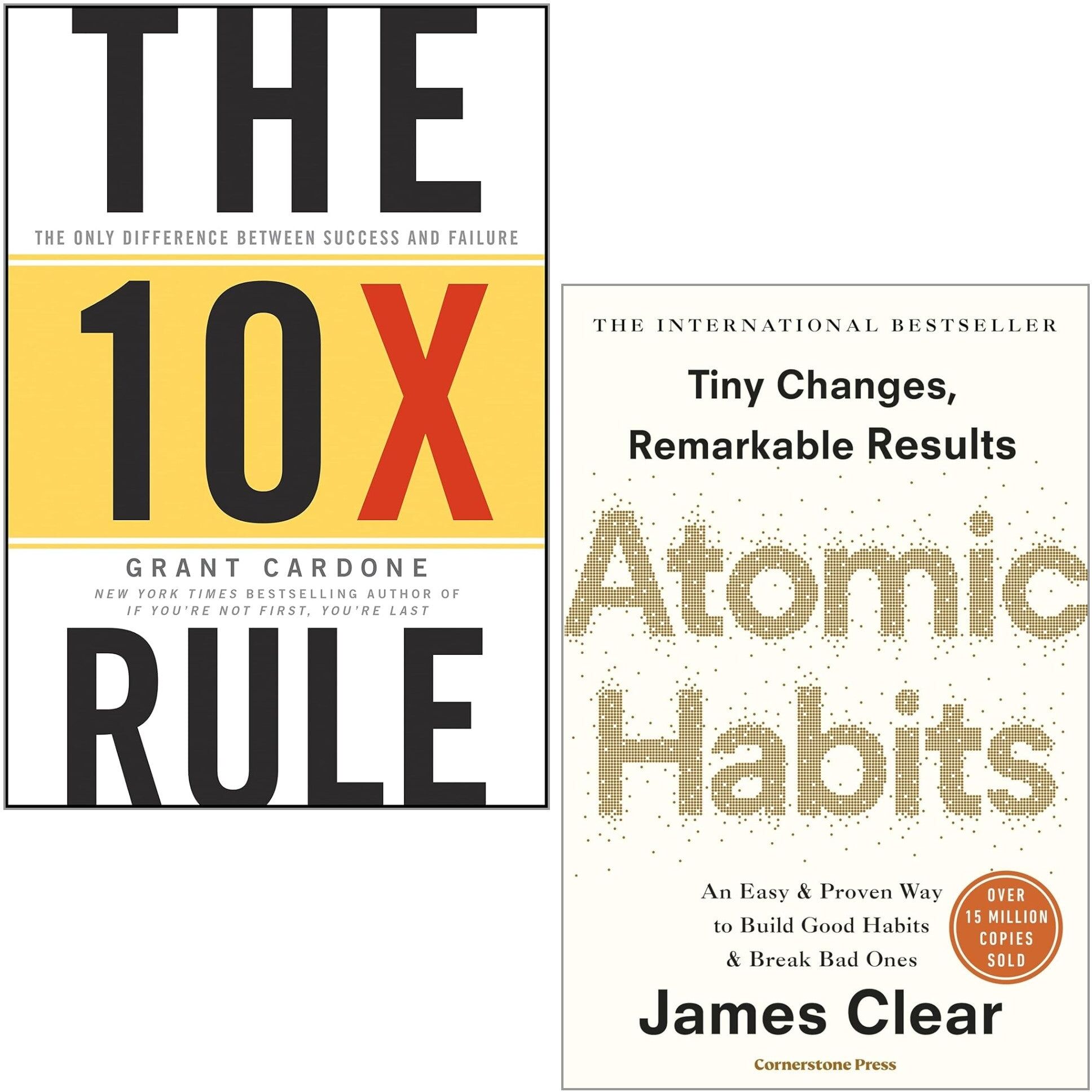
Wiley/Random House Business The 10X Rule [HB] & Atomic Habits [PB] – 2 Books Collection Set by Grant Cardone & James Clear Success, Productivity & Personal Development BooksUpgrade your mindset, habits, and results with The 10X Rule and Atomic Habits – 2 Books Collection Set by Grant Cardone and James Clear. This powerful self-development bundle combines two of the most influential personal growth books of all time. In The 10X Rule, Grant Cardone teaches you how to take massive action, think bigger, and achieve extraordinary success in business and life. Atomic Habits by James Clear reveals how small, consistent habit changes can lead to remarkable long-term improvement. Together, these books provide a complete system for high performance, productivity, goal achievement, and personal transformation—helping you build the habits and mindset needed to succeed. The 10X Rule [Hardcover] Achieve "Massive Action" results and accomplish your business dreams! While most people operate with only three degrees of action-no action, retreat, or normal action-if you're after big goals, you don't want to settle for the ordinary. To reach the next level, you must understand the coveted 4th degree of action. This 4th degree, also know as the 10 X Rule, is that level of action that guarantees companies and individuals realize their goals and dreams. The 10 X Rule unveils the principle of "Massive Action," allowing you to blast through business clichés and risk-aversion while taking concrete steps to reach your dreams. It also demonstrates why people get stuck in the first three actions and how to move into making the 10X Rule a discipline. Find out exactly where to start, what to do, and how to follow up each action you take with more action to achieve Massive Action results. Atomic Habits [Paperback] Transform your life with tiny changes in behaviour, starting now. People think that when you want to change your life, you need to think big. But world-renowned habits expert James Clear has discovered another way. He knows that real change comes from the compound effect of hundreds of small decisions: doing two push-ups a day, waking up five minutes early, or holding a single short phone call. He calls them atomic habits.25,99 £*Shipping: 2,99 £Secure redirect to the provider
-
Could social policy have been maintained while still achieving economic growth?
Yes, social policy could have been maintained while still achieving economic growth. By implementing policies that support both social welfare and economic development, such as investing in education and healthcare, providing social safety nets, and promoting inclusive economic growth, a balance can be achieved. This approach can lead to a more equitable distribution of resources and opportunities, ultimately benefiting both the society and the economy. It is possible to prioritize social policy while also fostering economic growth through thoughtful and strategic policymaking. **
-
What is the difference between efficiency and productivity?
Efficiency refers to how well resources are utilized to achieve a specific goal or output, while productivity measures the output or results generated from a specific amount of input or resources. Efficiency focuses on minimizing waste and maximizing output with the resources available, while productivity is a measure of how much output is produced relative to the input used. In essence, efficiency is about doing things right, while productivity is about doing the right things. **
-
What are the connections between efficiency and productivity?
Efficiency and productivity are closely connected in that efficiency refers to the ability to accomplish a task with minimal waste, effort, or cost, while productivity refers to the rate at which goods or services are produced. When a process or system is efficient, it can lead to increased productivity because it allows for more output to be generated with the same amount of input. Conversely, when productivity is high, it often indicates that the resources and processes are being used efficiently. Therefore, improving efficiency can lead to increased productivity, and vice versa, as they both contribute to the overall effectiveness of a business or organization. **
-
Does increasing productivity lead to higher economic efficiency?
Yes, increasing productivity can lead to higher economic efficiency. When a company or economy can produce more output with the same input of resources, it can lead to lower production costs and higher profits. This can also lead to lower prices for consumers, which can increase overall economic welfare. Additionally, higher productivity can lead to increased competitiveness in the global market, which can further contribute to economic efficiency. **
* All prices are inclusive of VAT and, if applicable, plus shipping costs. The offer information is based on the details provided by the respective shop and is updated through automated processes. Real-time updates do not occur, so deviations can occur in individual cases. ** Note: Parts of this content were created by AI.