Buy business-center.eu ?
We are moving the project
business-center.eu .
Are you interested in purchasing the domain
business-center.eu ?
domain@kv-gmbh.de · 0541-91531010
Buy business-center.eu ?
Should I choose brakes from Brembo, Barum, Herth+Buss, or should I go with Bosch?
When choosing brakes for your vehicle, it is important to consider factors such as quality, performance, and price. Brembo is known for high-performance brakes and is a popular choice for sports cars and racing vehicles. Bosch is a reputable brand that offers a wide range of brake products suitable for various vehicle types. Herth+Buss is known for providing reliable and affordable brake components. Barum is a budget-friendly option that offers decent quality brakes for everyday driving. Ultimately, the best choice will depend on your specific needs and budget. **
Can economic efficiency and productivity develop mutually?
Yes, economic efficiency and productivity can develop mutually. When businesses and industries become more efficient in their operations, they can produce more output with the same amount of input, leading to increased productivity. Similarly, when productivity increases, it can drive economic efficiency by reducing waste and improving resource allocation. Therefore, as businesses and industries focus on improving efficiency and productivity, they can reinforce and support each other's development. **

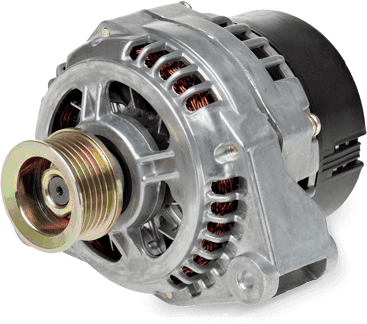
Similar search terms for HERTH-BUSS-ELPARTS-89901233
Top-Angebote
Products related to HERTH-BUSS-ELPARTS-89901233:
-
HERTH+BUSS ELPARTS 32039471 AlternatorVoltage [V]: 14; Alternator Charging Current [A]: 65; Pulleys: with V-ribbed belt pulley; Belt Pulley Ø [mm]: 60; Number of ribs: 4; Position/Degree: re 47-48; Used part return not required: ; Emissions Standard: Euro 3; Construction Year to: 05/1994, 08/1999, 04/1997, 03/2000; Engine Number from: 5219883, 5670924, 09416635; Engine Number to: 5219882, 5670923, 09416634, 09416635, 2533528; Vehicle Equipment: for vehicles without air conditioning, for vehicles without power steering, for vehicles with air conditioning; Construction Year from: 05/1997; Climate Zones: not for cold climate zones; TecDoc Engine Number: 1076; Injection System: Multi Point Injection (MPI); Left-/right-hand drive vehicles: for left-hand drive vehicles108,99 £*Shipping: 8,45 £Secure redirect to the provider
-
HERTH+BUSS ELPARTS 51305685 PlugNumber of pins: 3; Voltage from [V]: 6; Voltage to [V]: 24; Capacity at 24V: 16 A (1,5 mm2), 25 A (2,5 mm2); Connecting thread: PG16; Material: Plastic; Protection Type (IP Code): IP X4; Mounting Type: Flat Plug-in Connector; Socket Width [mm]: 6,3; Connector/Clamp: with cable gland25,49 £*Shipping: 8,45 £Secure redirect to the provider
-
HERTH+BUSS ELPARTS 51306856 SocketVoltage from [V]: 12; Voltage to [V]: 24; Connector/Clamp: with USB socket; Output voltage USB [V]: 5; Output current USB [mA]: 5000; Supplementary Article / Supplementary Info Info 2: with overvoltage protection, with bolted-on plate, with bolts/screws, Electromagnetic Compatibility (EMC); Fitted Diameter [mm]: 27,8; Cable Length [mm]: 15032,49 £*Shipping: 8,45 £Secure redirect to the provider


-
What is the difference between efficiency and productivity?
Efficiency refers to how well resources are utilized to achieve a specific goal or output, while productivity measures the output or results generated from a specific amount of input or resources. Efficiency focuses on minimizing waste and maximizing output with the resources available, while productivity is a measure of how much output is produced relative to the input used. In essence, efficiency is about doing things right, while productivity is about doing the right things. **
-
What are the connections between efficiency and productivity?
Efficiency and productivity are closely connected in that efficiency refers to the ability to accomplish a task with minimal waste, effort, or cost, while productivity refers to the rate at which goods or services are produced. When a process or system is efficient, it can lead to increased productivity because it allows for more output to be generated with the same amount of input. Conversely, when productivity is high, it often indicates that the resources and processes are being used efficiently. Therefore, improving efficiency can lead to increased productivity, and vice versa, as they both contribute to the overall effectiveness of a business or organization. **
-
Does increasing productivity lead to higher economic efficiency?
Yes, increasing productivity can lead to higher economic efficiency. When a company or economy can produce more output with the same input of resources, it can lead to lower production costs and higher profits. This can also lead to lower prices for consumers, which can increase overall economic welfare. Additionally, higher productivity can lead to increased competitiveness in the global market, which can further contribute to economic efficiency. **
-
What is the difference between productivity, efficiency, and profitability?
Productivity refers to the amount of output produced per unit of input, such as time or resources. Efficiency, on the other hand, focuses on how well resources are used to achieve a specific goal or output. Profitability, meanwhile, is a measure of how efficiently a company generates profit relative to its costs and expenses. In essence, productivity is about output per input, efficiency is about resource utilization, and profitability is about the bottom line of a business. **


What is the relationship between productivity and economic efficiency?
Productivity and economic efficiency are closely related concepts. Productivity refers to the amount of output produced per unit of input, such as labor or capital. When productivity increases, more output is produced with the same amount of input, leading to greater economic efficiency. Economic efficiency, on the other hand, refers to the optimal allocation of resources to maximize output and minimize waste. Therefore, higher productivity often leads to greater economic efficiency as resources are used more effectively to produce goods and services. Conversely, lower productivity can lead to inefficiencies in resource allocation and reduced overall economic efficiency. **
How do profitability, productivity, and efficiency differ from each other?
Profitability refers to the ability of a company to generate profit, which is the difference between revenue and expenses. Productivity measures the output of goods or services produced per unit of input, such as labor or capital. Efficiency, on the other hand, focuses on how well resources are utilized to achieve a specific goal, often measured by the ratio of input to output. In summary, profitability is about generating profit, productivity is about output per input, and efficiency is about maximizing output with the resources available. **
Top-Angebote
Products related to HERTH-BUSS-ELPARTS-89901233:
-
HERTH+BUSS ELPARTS 32001240 AlternatorVoltage [V]: 14; Alternator Charging Current [A]: 100; Pulleys: with V-ribbed belt pulley; Belt Pulley Ø [mm]: 50; Number of ribs: 6; Position/Degree: 0; Used part return not required: ; Construction Year to: 08/1995, 09/1995, 03/1997, 01/1998, 02/1998, 02/1996, 08/1994, 08/1997, 08/1999, 09/1993, 09/1992, 04/1998, 08/2000, 05/2001, 10/2000, 09/2002, 08/2001, 12/1998, 09/2001, 01/2006, 06/2001, 08/1998; Engine Code: X16SZ, 16SV, 20SEH, C18NZ, 20XEJ, 20 XEJ, C20LET, C20NE, C20XE, C18XE, C16XE, X20SE, X20XEV, X18XE, C18XEL, X14XE, X16XE, X22XE, C 20 XE, C 18 NZ, X14SZ, C 14 NZ, X18XE1, X22SE, Y22SE, Y22XE, Z22XE; Construction Year from: 09/1991, 09/1988, 09/1989, 09/1992, 09/1995, 09/1993, 02/1995, 04/1994, 04/1996, 09/1994, 03/1992, 07/1995, 07/1994, 03/1996, 10/1997, 01/1999, 09/1997, 03/2000, 03/1998, 05/1998, 06/1998; TecDoc Engine Number: 4740, 4782, 4785, 4819, 2736, 2737, 4796, 2732, 17583, 17581; Vehicle Identification Number (VIN) from: P2500001, P3000001, P5000001, P8000001, P4000001, P2500001, P3000001,, P4000001, P5000001, S3000001, S4000001, S6000013, X3000001, T4000001, X6000001, 453151, Y4074790; Vehicle Equipment: for vehicles with power steering, for vehicles with air conditioning, for vehicles with manual transmission; Vehicle Identification Number (VIN) to: Y1999999, W3999999, Y4074789, W6999999, 17042058, Y5, YL, YP, YS, W4999999, W3012140, X6000001; Manufacturer Restriction: Delphi116,99 £*Shipping: 1,99 £Secure redirect to the provider
-
HERTH+BUSS ELPARTS 32039471 AlternatorVoltage [V]: 14; Alternator Charging Current [A]: 65; Pulleys: with V-ribbed belt pulley; Belt Pulley Ø [mm]: 60; Number of ribs: 4; Position/Degree: re 47-48; Used part return not required: ; Emissions Standard: Euro 3; Construction Year to: 05/1994, 08/1999, 04/1997, 03/2000; Engine Number from: 5219883, 5670924, 09416635; Engine Number to: 5219882, 5670923, 09416634, 09416635, 2533528; Vehicle Equipment: for vehicles without air conditioning, for vehicles without power steering, for vehicles with air conditioning; Construction Year from: 05/1997; Climate Zones: not for cold climate zones; TecDoc Engine Number: 1076; Injection System: Multi Point Injection (MPI); Left-/right-hand drive vehicles: for left-hand drive vehicles108,99 £*Shipping: 8,45 £Secure redirect to the provider
-
Should I choose brakes from Brembo, Barum, Herth+Buss, or should I go with Bosch?
When choosing brakes for your vehicle, it is important to consider factors such as quality, performance, and price. Brembo is known for high-performance brakes and is a popular choice for sports cars and racing vehicles. Bosch is a reputable brand that offers a wide range of brake products suitable for various vehicle types. Herth+Buss is known for providing reliable and affordable brake components. Barum is a budget-friendly option that offers decent quality brakes for everyday driving. Ultimately, the best choice will depend on your specific needs and budget. **
-
Can economic efficiency and productivity develop mutually?
Yes, economic efficiency and productivity can develop mutually. When businesses and industries become more efficient in their operations, they can produce more output with the same amount of input, leading to increased productivity. Similarly, when productivity increases, it can drive economic efficiency by reducing waste and improving resource allocation. Therefore, as businesses and industries focus on improving efficiency and productivity, they can reinforce and support each other's development. **
-
What is the difference between efficiency and productivity?
Efficiency refers to how well resources are utilized to achieve a specific goal or output, while productivity measures the output or results generated from a specific amount of input or resources. Efficiency focuses on minimizing waste and maximizing output with the resources available, while productivity is a measure of how much output is produced relative to the input used. In essence, efficiency is about doing things right, while productivity is about doing the right things. **
-
What are the connections between efficiency and productivity?
Efficiency and productivity are closely connected in that efficiency refers to the ability to accomplish a task with minimal waste, effort, or cost, while productivity refers to the rate at which goods or services are produced. When a process or system is efficient, it can lead to increased productivity because it allows for more output to be generated with the same amount of input. Conversely, when productivity is high, it often indicates that the resources and processes are being used efficiently. Therefore, improving efficiency can lead to increased productivity, and vice versa, as they both contribute to the overall effectiveness of a business or organization. **
Similar search terms for HERTH-BUSS-ELPARTS-89901233
-
HERTH+BUSS ELPARTS 51305685 PlugNumber of pins: 3; Voltage from [V]: 6; Voltage to [V]: 24; Capacity at 24V: 16 A (1,5 mm2), 25 A (2,5 mm2); Connecting thread: PG16; Material: Plastic; Protection Type (IP Code): IP X4; Mounting Type: Flat Plug-in Connector; Socket Width [mm]: 6,3; Connector/Clamp: with cable gland25,49 £*Shipping: 8,45 £Secure redirect to the provider
-
HERTH+BUSS ELPARTS 51306856 SocketVoltage from [V]: 12; Voltage to [V]: 24; Connector/Clamp: with USB socket; Output voltage USB [V]: 5; Output current USB [mA]: 5000; Supplementary Article / Supplementary Info Info 2: with overvoltage protection, with bolted-on plate, with bolts/screws, Electromagnetic Compatibility (EMC); Fitted Diameter [mm]: 27,8; Cable Length [mm]: 15032,49 £*Shipping: 8,45 £Secure redirect to the provider
-
HERTH+BUSS ELPARTS 80690310 WorklightWidth [mm]: 122,6; Height: 142,2; Depth [mm]: 58,1; Light Design: LED; Number of LEDs: 9; Luminous Flux [lm]: 2160; Voltage from [V]: 12; Voltage to [V]: 36; Rated Voltage [V]: 12, 36; Mounting Type: mounting; Housing Type: Aluminium Housing; Lens Material: PC (Polycarbonate); Cable Length [mm]: 280; Connector type: open end; Light Distribution: Short-Range Illumination; Fastening Type: Single pivoted lever; Protection Type (IP Code): IP 6K9K; Rated Power [W]: 22; Temperature range from [°C]: -30; Temperature range to [°C]: +50; Supplementary Article / Supplementary Info Info 2: Electromagnetic Compatibility (EMC); fulfils ECE standard: R10, R23; Registration Type: ADR/GGVS approved; Colour Temperature [K]: 6000; Supported by: De-Minimis70,99 £*Shipping: 8,45 £Secure redirect to the provider
-
Does increasing productivity lead to higher economic efficiency?
Yes, increasing productivity can lead to higher economic efficiency. When a company or economy can produce more output with the same input of resources, it can lead to lower production costs and higher profits. This can also lead to lower prices for consumers, which can increase overall economic welfare. Additionally, higher productivity can lead to increased competitiveness in the global market, which can further contribute to economic efficiency. **
-
What is the difference between productivity, efficiency, and profitability?
Productivity refers to the amount of output produced per unit of input, such as time or resources. Efficiency, on the other hand, focuses on how well resources are used to achieve a specific goal or output. Profitability, meanwhile, is a measure of how efficiently a company generates profit relative to its costs and expenses. In essence, productivity is about output per input, efficiency is about resource utilization, and profitability is about the bottom line of a business. **
-
What is the relationship between productivity and economic efficiency?
Productivity and economic efficiency are closely related concepts. Productivity refers to the amount of output produced per unit of input, such as labor or capital. When productivity increases, more output is produced with the same amount of input, leading to greater economic efficiency. Economic efficiency, on the other hand, refers to the optimal allocation of resources to maximize output and minimize waste. Therefore, higher productivity often leads to greater economic efficiency as resources are used more effectively to produce goods and services. Conversely, lower productivity can lead to inefficiencies in resource allocation and reduced overall economic efficiency. **
-
How do profitability, productivity, and efficiency differ from each other?
Profitability refers to the ability of a company to generate profit, which is the difference between revenue and expenses. Productivity measures the output of goods or services produced per unit of input, such as labor or capital. Efficiency, on the other hand, focuses on how well resources are utilized to achieve a specific goal, often measured by the ratio of input to output. In summary, profitability is about generating profit, productivity is about output per input, and efficiency is about maximizing output with the resources available. **
* All prices are inclusive of VAT and, if applicable, plus shipping costs. The offer information is based on the details provided by the respective shop and is updated through automated processes. Real-time updates do not occur, so deviations can occur in individual cases. ** Note: Parts of this content were created by AI.